.gif)
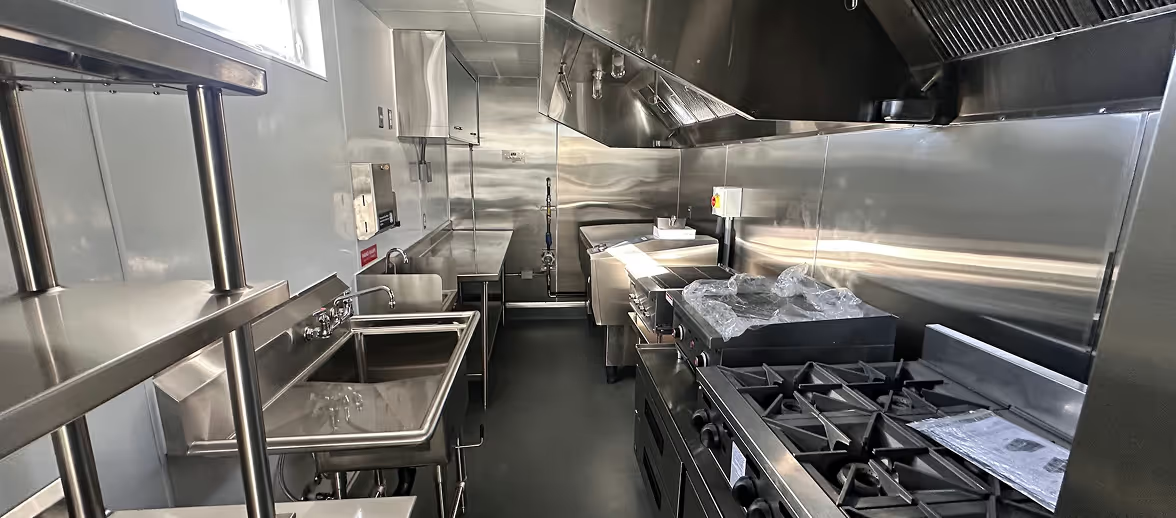
The first time you walk into a mobile kitchen your community has rented for a renovation, you don't reach for a menu — you reach for the equipment schedule and read it line by line. What sits on that page determines whether the next five or six months of dining look like the operation you run now or a scaled-down version of it.
For senior living the stakes are steeper than for most hospitality operators, because your residents sit inside the FDA Food Code's highly susceptible population definition and your therapeutic and texture-modified diets don't pause during a renovation. Here are the nine pieces of equipment the schedule has to carry.
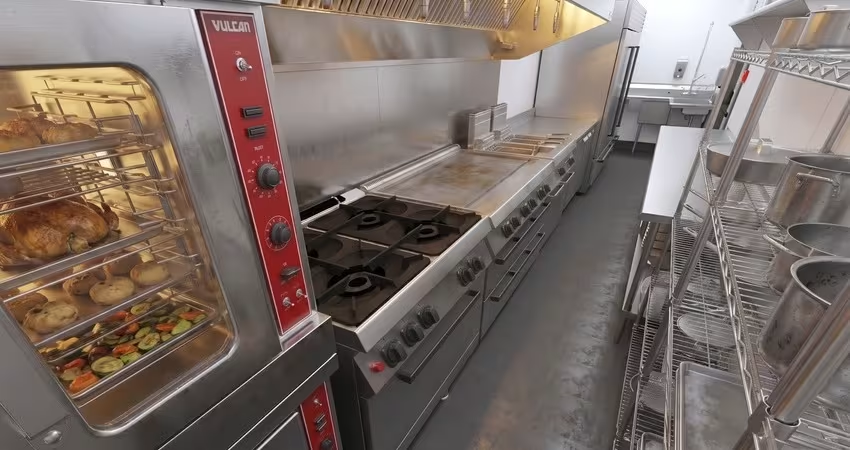
1. Combi Oven — the Workhorse for Batch Cooking and Texture Prep
A combi oven combines convection, steam, and hybrid modes in one cabinet, letting your kitchen batch-cook proteins, steam soft-texture vegetables, retherm plated meals, and hold cooked product without overdrying — all from a single footprint. In a mobile kitchen serving a senior living program, it earns its floor space several times a day.
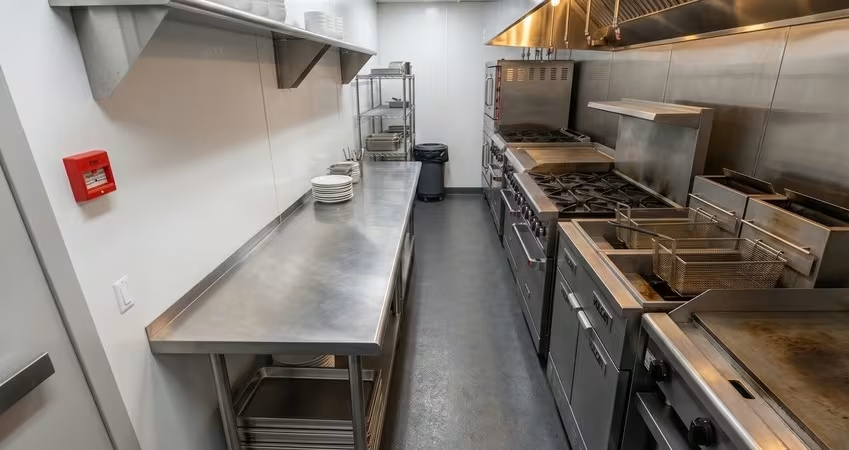
Retrofitted trailers rarely carry one, because the weight, three-phase power draw, and boiler plumbing exceed what a converted trailer's build was designed to support — so the equipment schedule quietly downgrades to a residential-grade convection oven that struggles to hold moisture on a full sheet-pan load.
What to look for on the equipment schedule:
- Minimum 6-pan capacity for a 200-meal community, 10-pan for 400+
- Boilerless or steam-generator model matched to your utility connection
- Programmable cook cycles for consistency across shifts
2. Blast Chiller — the Piece That Makes Cook-Chill Workflow Possible
A blast chiller pulls hot cooked product from the 135 °F danger-zone ceiling down to 41 °F in ninety minutes or less, holding food-safety timelines a walk-in cooler cannot on its own. Paired with a combi oven, it enables cook-chill workflow — the operational spine of most senior living programs.
For a population classified as highly susceptible under the FDA Food Code, passive cooling isn't the same risk profile it is in a restaurant, and a blast chiller is what makes advance batch prep safely repeatable across a multi-month rental.
Note: Retrofitted trailers routinely omit blast chillers — they weren't built for cook-chill workflow, and many don't carry the compressor-grade refrigeration needed to pull down hot product without stressing the box.
3. Walk-in Cooler and Walk-in Freezer, Physically Separated
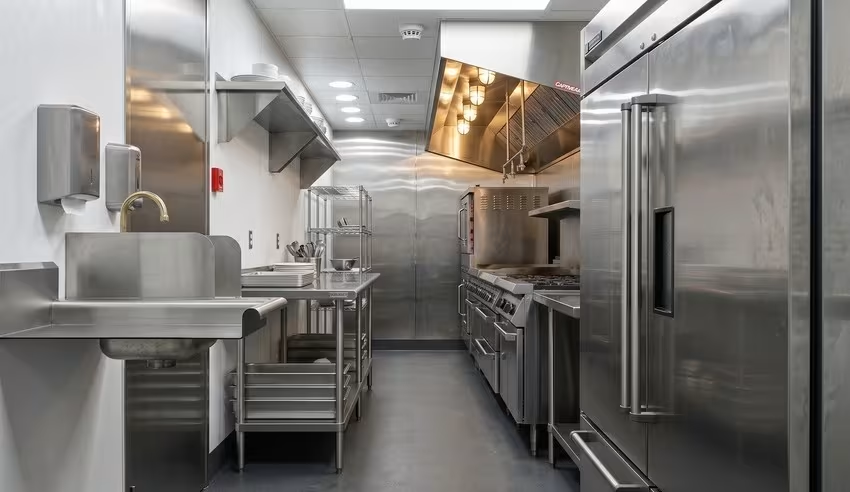
A senior living mobile kitchen needs a proper walk-in cooler and walk-in freezer, physically separated — not a pair of reach-ins against the back wall. The volume, allergen-separation, and therapeutic-diet ingredient staging your program runs on won't fit inside reach-in door footprints for a five-month rental.
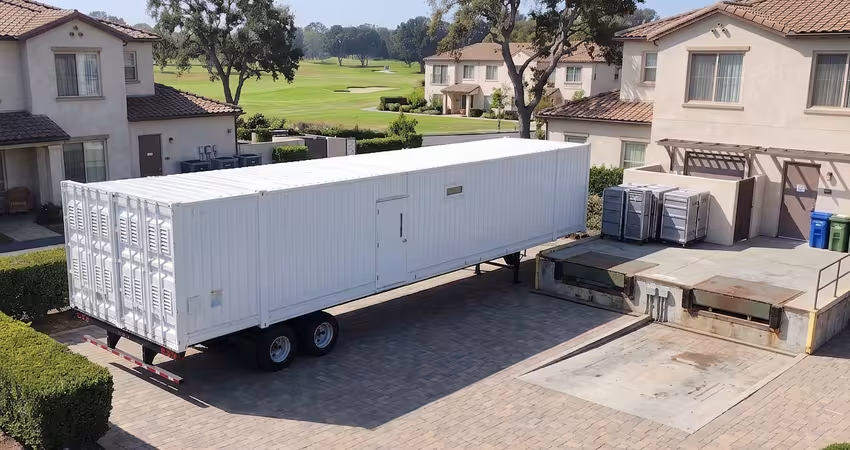
Mobile Culinaire's Front Porch Communities deployment — a 2×53′ setup producing 400 to 500 meals a day for five months — carried both walk-ins inside the trailer footprint precisely because the community's therapeutic-diet rotation couldn't be handled by reach-ins.
What to look for on the equipment schedule:
- Walk-in cooler with at least 6′ interior depth for shelved bulk storage
- Freezer as a separate compartment, not a shared-cavity dual-temp unit
- Exterior-facing thermometer readouts for at-a-glance inspection compliance
4. Convection or Double-Deck Oven for High-Volume Roasting and Baking
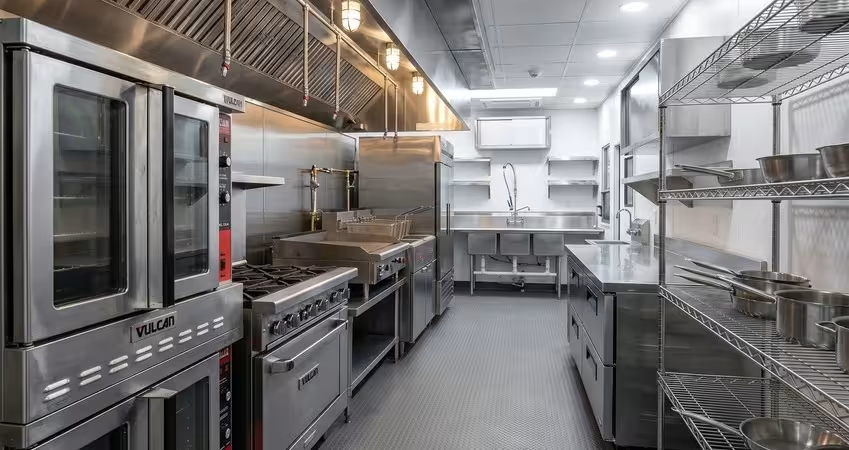
A convection oven — or a double-deck for larger programs — handles the roasting and baking a combi oven wasn't designed to carry. For a 300-plus-meal operation, two cavities running independent temperatures let your baker and your line cook work the same shift without collision. The combi handles steam and low-and-slow while the convection handles crust and volume — the split you need for a menu running roasted proteins, sheet-pan casseroles, and morning bake in the same day.
5. Tilting Braising Pan — the Volume-Cooking Backbone
A tilting braising pan handles stews, soups, sauces, oatmeal, ground-meat batch cooking, and shallow braises — the volume-cooking backbone of most senior living menus. The tilt mechanism lets one cook empty and refill it between service periods without lifting a stockpot, which matters over a five-month rental. The 30 or 40-gallon size covers most menus; look for electric tilt over manual, a fitted lid, and a drain assembly compatible with the trailer's grey-water plumbing.
Tip: If your menu leans heavily on stock, sauce, or high-volume soup, ask whether a steam-jacketed kettle can be added alongside the tilt skillet. The kettle handles higher gallonage without the tilt-and-transfer step.
6. Commercial Food Processor and Immersion Blender — Iddsi Texture Prep
IDDSI Level 4 pureed and Level 5 minced-and-moist textures aren't a modification of the main menu — they're separate preparations that need dedicated equipment. A commercial food processor and a high-power immersion blender let your kitchen produce compliant texture-modified diets at the same portion volumes as the main menu.
CMS's rule at 42 CFR §483.60 requires that therapeutic diet orders be specific and documented, and since the Academy of Nutrition and Dietetics adopted IDDSI as the sole texture-modified framework in its Nutrition Care Manual, surveyors increasingly cite IDDSI-referenced deficiencies. Direct Supply's clinical guidance covers operationalisation; the equipment side is what your mobile kitchen has to carry.
What to look for on the equipment schedule:
- 5-gallon minimum food-processor bowl, dedicated (not shared with regular-menu prep)
- Immersion blender rated for extended run time, not a hand-held stick
- Fork-pressure and spoon-tilt testing space built into the prep-table layout
7. Ventilation, Fire Suppression, and Makeup-Air Unit
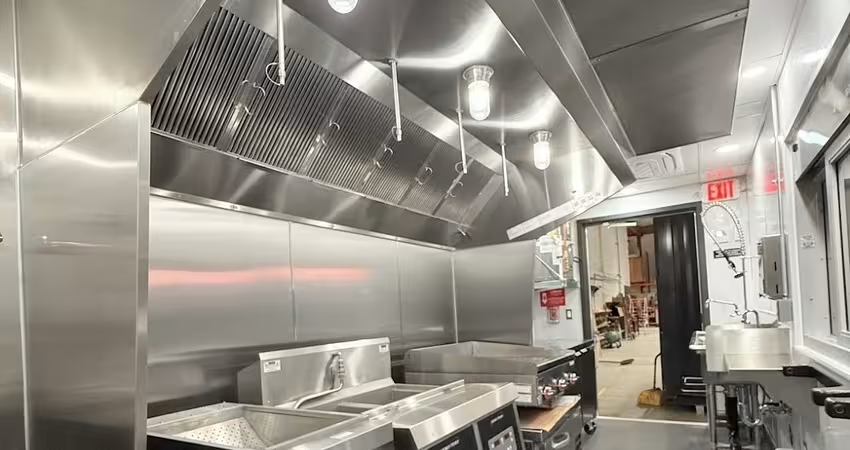
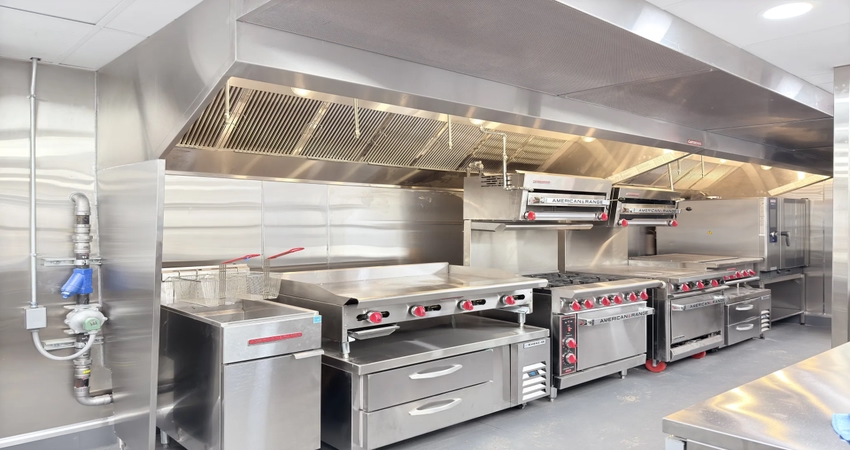
The hood, fire-suppression system, and makeup-air unit are the envelope that makes the rest of the equipment safely operable. A UL-300-compliant hood, an ANSUL-style suppression system, and a makeup-air unit sized to the exhaust CFM — this is the difference between a kitchen and a fire hazard.
For a chef running a five-month rental, the makeup-air unit is the piece that most affects staff comfort. When it's undersized or missing, the trailer runs at negative pressure, dining-room air gets pulled in, line temperatures climb, and ventilation fails inspection within weeks. Senior Housing News coverage of renovation-period dining regularly flags this as the point where "temporary" starts costing culinary staff.
Note: Undersized makeup-air is the most common ventilation failure on retrofitted trailers. Ask for exhaust CFM and makeup-air CFM on the same page of the schedule, and confirm they're within 10 to 15 % of each other.
8. Hot-Holding Cabinet — Dining-Room Delivery at 135 °F
Meal delivery to independent-living, assisted-living, and memory-care wings often sits in transit for twenty to forty minutes between the trailer door and the resident's tray. A hot-holding cabinet keeps plated meals or bulk pans above the FDA Food Code's 135 °F threshold across that window without temperature drift.
A dry-hold cabinet will pull moisture out of pureed and moist-texture preparations within twenty minutes, which is a problem for any menu with meaningful IDDSI volume. Mobile Culinaire's guide to health and safety compliance covers the broader temperature envelope; on the equipment side, ask whether the cabinet has humidity control and whether you're getting plug-in transport carts rather than passive insulated boxes.
9. Conveyor Dishwasher and Three-Compartment Sink
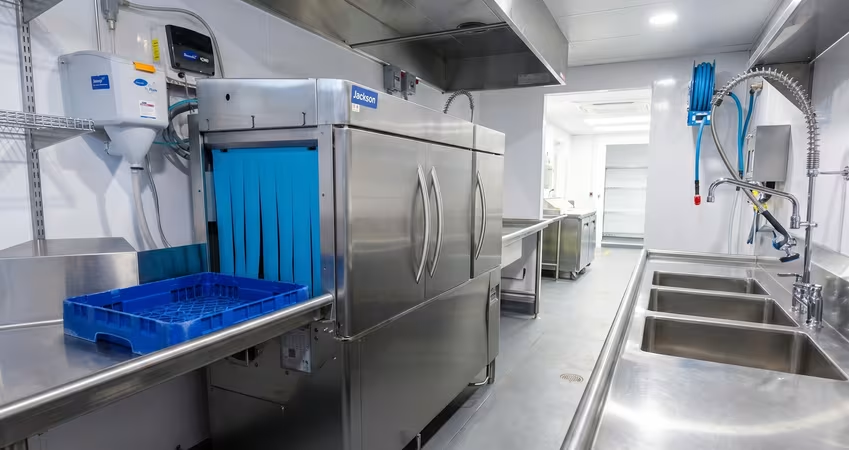
For a 300-plus-meal community over a five-month rental, a conveyor dishwasher isn't optional — it's the difference between two dish shifts a day and a permanent backlog. A three-compartment sink handles pots, prep tools, and sanitizer-required items the conveyor can't take.
Front Porch is the reference again: 400 to 500 meals a day cannot cycle through an undercounter unit. Retrofitted trailers commonly ship with an undercounter build sized for food-truck volumes, and the substitution isn't visible on the quote unless you check the dishwasher line against your dish load.
What to look for on the equipment schedule:
- High-temperature sanitizer, not chemical-only
- Landing area on both dirty and clean sides sized for full racks
- Three-compartment sink dimensions matched to your largest batch-cooking pot
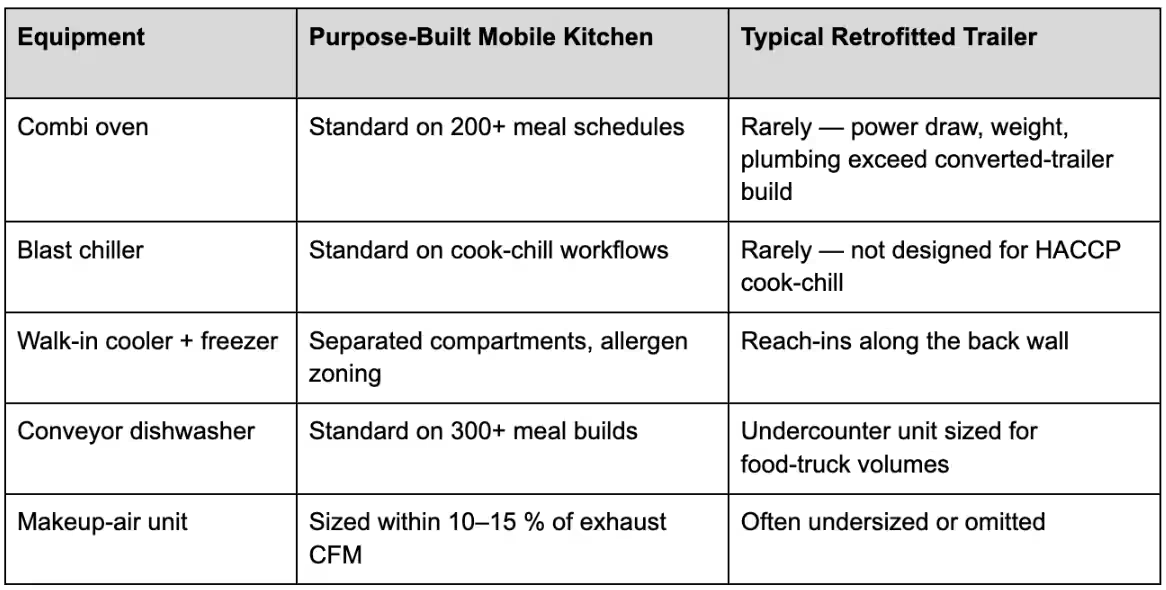
Purpose-Built vs. Retrofitted — What Schedules Usually Show
When you compare quotes, this is roughly what you find on each side:
Reading the Schedule Before You Sign
The nine pieces above aren't a wish list — they're the standard schedule a mobile kitchen serving a senior living community should ship with. Read each line and ask what happens to your therapeutic diet program, your texture-modification workflow, or your dish load if any is missing or downgraded. To see how the components fit together in a build configured for senior living, visit our senior living facilities market page.
Disclaimer
The FDA Food Code, IDDSI framework, CMS Long-Term Care requirements, and local health and fire codes are updated periodically, and adoption varies by state and jurisdiction. Specific equipment requirements, temperature thresholds, hood classifications, and inspection protocols should be confirmed with the authority having jurisdiction before finalising a schedule with any provider.
People Also Ask (FAQ)
What equipment must a mobile kitchen include to serve a senior living community?
At minimum: a combi oven, blast chiller, walk-in cooler and walk-in freezer (separated), convection or double-deck oven, tilting braising pan, commercial food processor with immersion blender, hot-holding cabinet, conveyor dishwasher paired with a three-compartment sink, and a UL-300-compliant hood with a matching makeup-air unit. A retrofitted trailer built for weekend food-service will rarely carry all nine.
Can a mobile kitchen prepare IDDSI Level 4 pureed and Level 5 minced-and-moist diets?
Yes — provided the equipment schedule includes a dedicated commercial food processor (5-gallon minimum bowl), a high-power immersion blender rated for extended run, and hot-holding capability with humidity control to prevent moisture loss on dining-room delivery. Storage must keep texture-modified prep physically separated from regular-menu items to avoid cross-contact during a multi-month rental.
How do I evaluate the equipment schedule on a mobile kitchen quote for a senior-living renovation?
Read the schedule line by line against your actual production workflow: batch cooking, texture modification, refrigerated storage volume, dish load, and hot-holding for wing delivery. Ask specifically about cook-chill capability, walk-in versus reach-in refrigeration, dishwasher throughput matched to meal count, and makeup-air CFM versus exhaust CFM on the same page of the document.

Testimonial
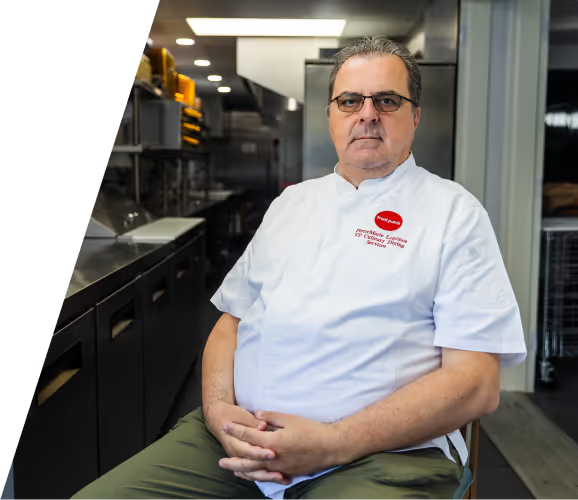
"What is standing out when you look at the mobile kitchen operation is the efficiency that we can really achieve because it's built for that."
Tell us about your kitchen needs and request a quote.
.png)
Turnkey mobile kitchen
Proudly made in-house in the USA
Commercial grade kitchen equipment
Code-compliant
Trusted by Industry Leaders