.gif)
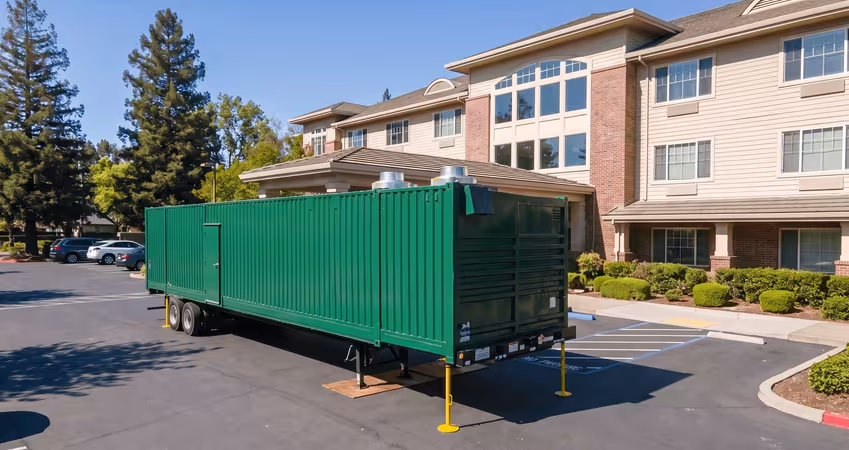
Every meal in a senior living community is a care obligation. When the kitchen goes down — whether for a scheduled renovation or a 2 a.m. equipment failure — the F&B operation doesn't pause. Residents with texture-modified diets, timed medication schedules, and nutritional protocols that the FDA Food Code classifies as highly susceptible population requirements still need to eat three times a day, on time, prepared to spec.
Most operators plan for one senior living mobile kitchen scenario: the renovation. Fewer plan for the other four. A mobile kitchen rental isn't a single-use tool reserved for construction projects — it's a continuity asset deployed across at least five distinct situations, each with different lead times, configurations, and stakes. Here's what each scenario looks like from the F&B Director's seat.
1. Kitchen Renovation — The Planned Deployment That Still Catches F&B Off Guard
A kitchen renovation is the most common reason senior living communities deploy a mobile kitchen, yet F&B Directors routinely underestimate what "maintaining meal service" actually demands when the permanent kitchen goes fully offline for 12–20 weeks. As Food Service Director (2024) reported, timing and phasing are critical to maintaining operations. The real risk isn't the renovation itself — it's assuming a phased workaround or a cheap retrofitted trailer will carry the full dietary program.
Why a Retrofitted Trailer Falls Short Here
The F&B margin in senior living is already thin. According to Senior Housing News (2026), operators face persistent cost pressures and aging buildings that struggle to support operational changes. A retrofitted trailer that breaks down, lacks walk-in cold storage, or can't maintain consistent holding temperatures for pureed and mechanically altered textures doesn't just create discomfort — it generates compliance exposure and dietary failures that land on the F&B Director's P&L.
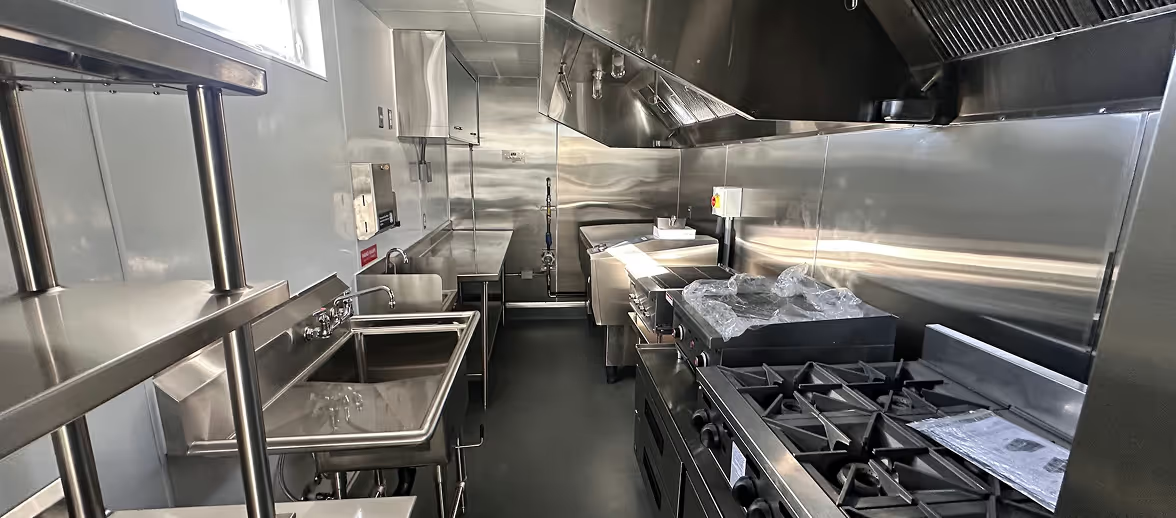
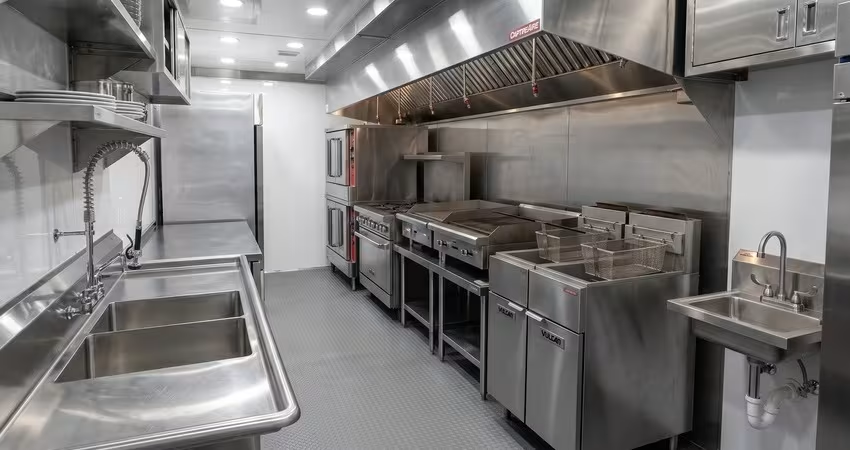
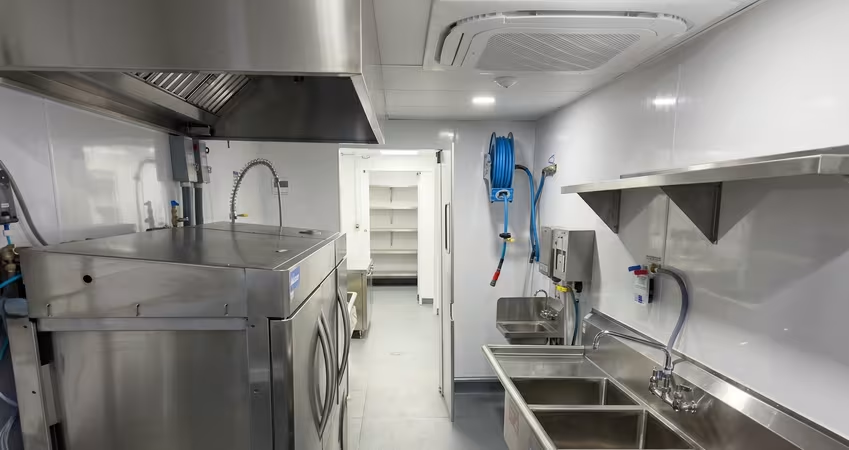
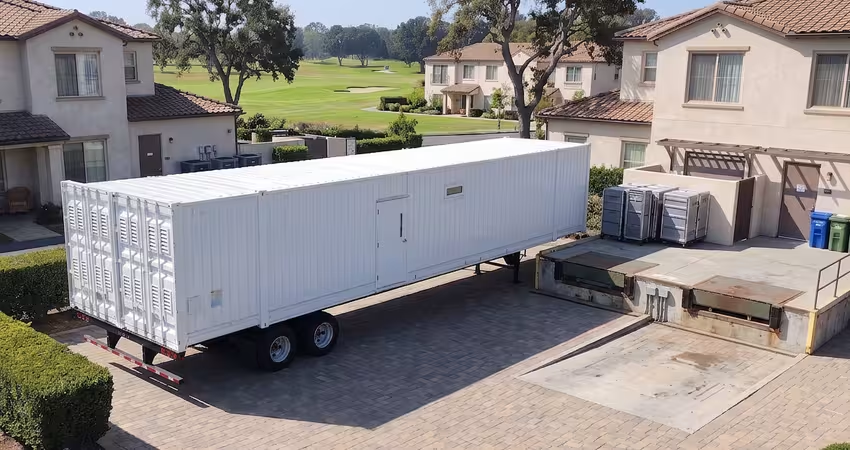
A purpose-built mobile kitchen, by contrast, arrives with commercial-grade equipment, full HVAC, fire suppression, and walk-in cooler/freezer storage designed for months of continuous use. That's the difference between limping through a renovation and running your full menu from day one.
Tip: Start temporary kitchen planning 12–16 weeks before construction begins. Early permitting coordination alone can add 1–6 weeks to the timeline if left too late. For a deeper planning walkthrough, see Mobile Culinaire's Senior Living Kitchen Renovation Guide.
2. Emergency Kitchen Failure — Fire, Flood, or Major Equipment Breakdown
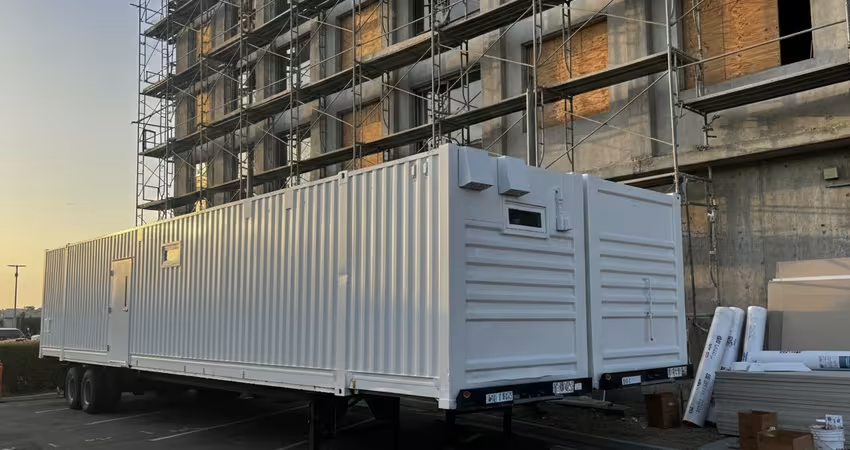
An emergency deployment gives the F&B Director zero lead time. A kitchen fire, a burst pipe that floods the production area, or a catastrophic exhaust hood failure shuts down meal service for every dining venue simultaneously — and every resident still needs to eat within hours, not days.
What Makes This Scenario Acute in Senior Living
Unlike a hotel where guests can dine off-site, senior living residents depend entirely on the community's kitchen. Many residents receive meals as part of their care plan, and facilities serving older adults must comply with CMS food service requirements that classify these residents as a highly susceptible population. Skipping a meal or substituting with cold pre-packaged food isn't just a service failure — it's a regulatory exposure.
Mobile Culinaire's standard delivery and installation timeline is one week for planned deployments, with standardized utility connections that minimize site prep complexity. In an emergency, that compressed timeline protects the F&B operation from cascading losses across every meal period.
Note: Emergency deployments still require local health department inspection before service can begin. Identify your community's permitting contacts and keep their information current before an emergency forces you to search for it. The community owns the local permit — not the rental provider.
3. Capacity Expansion — Adding Beds or Dining Venues Without Adding Kitchen Square Footage
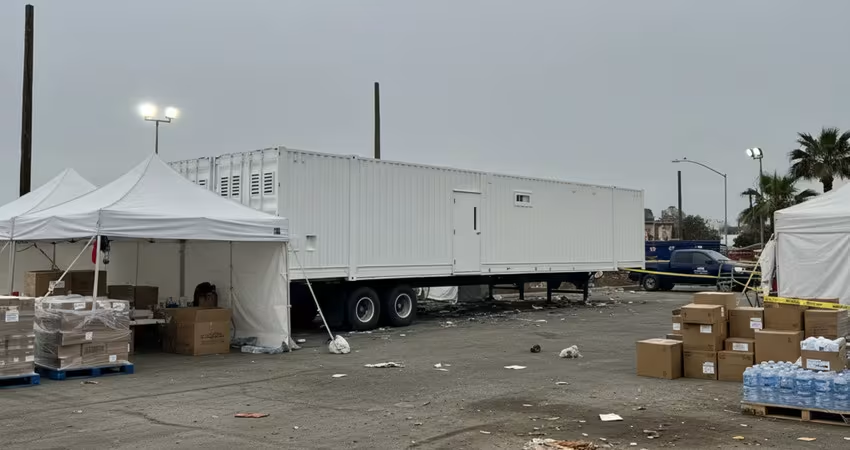
Census growth doesn't always come with a kitchen expansion budget. When a community adds a memory care wing, converts independent living units to assisted living, or opens a new dining venue, the permanent kitchen's throughput may not keep pace. A temporary kitchen senior living operators deploy during the gap protects meal quality without forcing a capital project on an accelerated timeline.
Sizing the Gap
The F&B Director needs to match production capacity to the new meal volume. The table below maps common expansion scenarios to the configuration starting points worth evaluating.
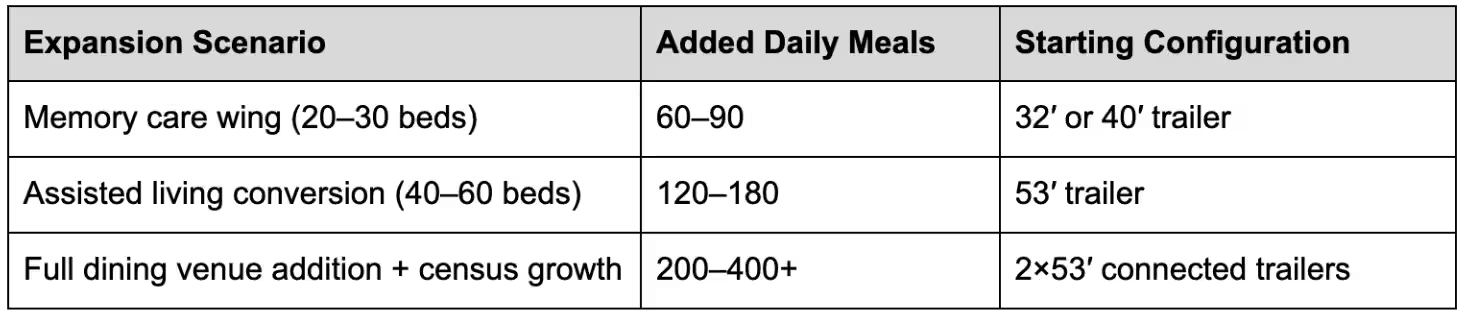
For detailed specifications on each configuration, review the full model lineup.
Tip: Equipment schedules are configurable to available inventory. If the expansion changes menu requirements — adding a memory care texture-modification program, for example — specify that during the consultation so the mobile kitchen arrives with the right prep surfaces and holding equipment.
4. Campus Consolidation — Centralizing Meal Production Across Multiple Buildings
Multi-building senior living campuses sometimes operate satellite kitchens in each building — a model that worked when each building had its own dining program but becomes a staffing and cost burden as the organization centralizes. Transitioning to a single centralized production kitchen requires taking satellite kitchens offline one at a time while maintaining meal delivery to every building.
The F&B Director's Stake
This scenario directly targets the F&B P&L. Centralization promises lower labor costs, tighter inventory control, and more consistent food quality. But buildings going without hot meal production during the switchover damages resident satisfaction and undermines the business case for the consolidation itself.
A mobile kitchen positioned on campus bridges each phase. It absorbs the production volume of each satellite kitchen as it goes offline, giving the culinary team a single temporary production point while the permanent centralized kitchen comes online.
5. Compliance-Driven Shutdown — When the Health Department or Fire Marshal Orders the Kitchen Closed
Not every kitchen closure is planned. A failed health department inspection, an NFPA 101 Life Safety Code violation flagged by the Fire Marshal, or an exhaust hood system that falls out of compliance can force an immediate shutdown with no renovation budget and no construction timeline attached. According to QRFS (2026), senior facilities must comply with strict fire protection and life safety requirements — and non-compliance in a CMS-certified facility can jeopardize Medicare and Medicaid reimbursement.
What the F&B Director Faces
The shutdown is immediate, the budget is unplanned, and every meal period is at risk. A mobile kitchen senior care facility operators can deploy quickly — arriving code-compliant and third-party inspected — turns an enforcement action into a contained disruption rather than a crisis that cascades into regulatory sanctions.
Note: Compliance-driven shutdowns often require corrective action documentation before the permanent kitchen can reopen. Having a temporary kitchen in place removes the pressure to rush repairs, which reduces the risk of incomplete fixes that trigger a follow-up violation.

How to Match Your Senior Living Mobile Kitchen Scenario to the Right Configuration
Each deployment scenario carries different planning windows, durations, and configuration needs. The table below provides a starting framework for the F&B Director's initial assessment.
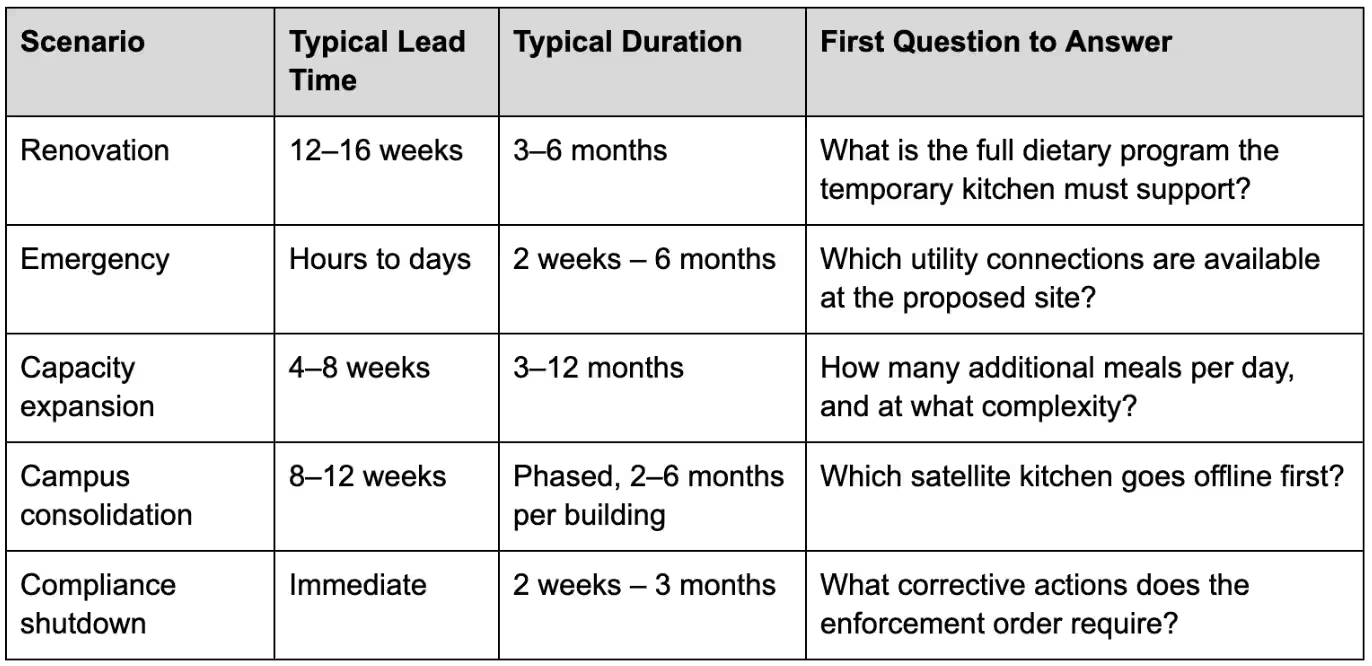
Whatever the scenario, the process starts the same way: assess daily meal volume, dietary program complexity, and available utility connections. Contact the Mobile Culinaire team to discuss your specific situation, or see how other senior living communities — including Front Porch Communities' 850 SF deployment serving 400–500 meals daily during a renovation — have maintained uninterrupted service.
Conclusion
The five senior living mobile kitchen scenarios above — renovation, emergency, expansion, consolidation, and compliance shutdown — each demand a different deployment approach. But they share one requirement: the temporary kitchen must perform at the same level as the permanent one, for a population that can't skip a meal and can't tolerate a drop in dietary precision.
See how communities like Front Porch have maintained full service through major transitions, and explore Mobile Culinaire's mobile kitchen configurations built for senior living operations.
Disclaimer
Permitting requirements, health department regulations, fire code standards, and CMS compliance obligations vary by state, county, and locality. This article is general guidance, not legal or regulatory advice. Confirm all requirements with the authority having jurisdiction before proceeding.
People Also Ask (FAQ)
How long does it take to set up a mobile kitchen at a senior living facility?
For planned deployments, delivery and installation typically takes one week once permitting is complete. Permitting adds 1–6 weeks depending on jurisdiction. Emergency deployments compress this timeline, but local health department inspection is still required before service can begin. Start the permitting conversation early — it's the single variable most likely to delay your go-live date.
Can a mobile kitchen meet dietary requirements for senior living residents?
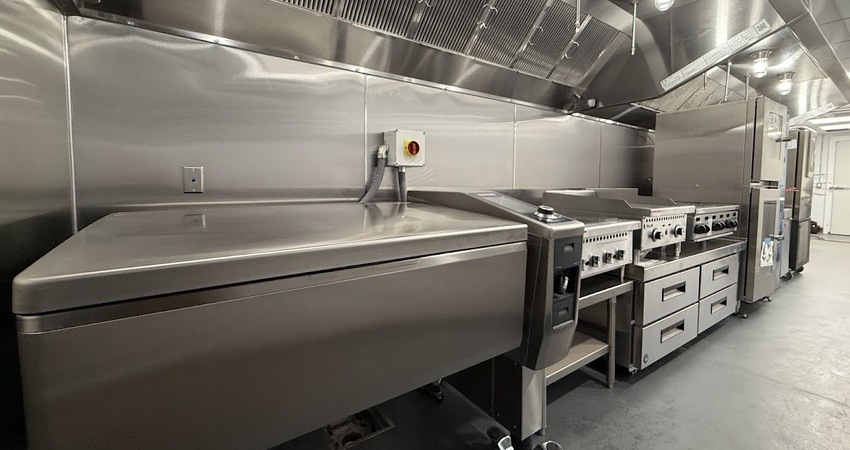
Yes. A purpose-built mobile kitchen arrives with commercial-grade cooking, refrigeration, and holding equipment supporting texture-modified, low-sodium, diabetic, renal, and allergy-specific meal preparation. The community's own culinary team operates the unit, maintaining the same dietary protocols and production standards residents already receive.
Who handles permitting for a temporary kitchen at a senior living community?
The community owns the local permit. Requirements vary by state, county, and municipality — contact the local Health Department, Fire Marshal, and Building Department early. The provider delivers code-compliant, third-party-inspected units and supporting documentation to streamline the approval process.

%20(1).avif)
Testimonial
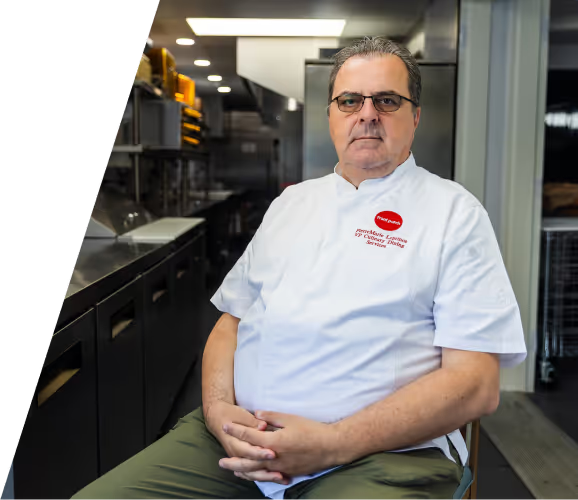
"What is standing out when you look at the mobile kitchen operation is the efficiency that we can really achieve because it's built for that."
Tell us about your kitchen needs and request a quote.
.png)
Turnkey mobile kitchen
Proudly made in-house in the USA
Commercial grade kitchen equipment
Code-compliant
Trusted by Industry Leaders