.gif)
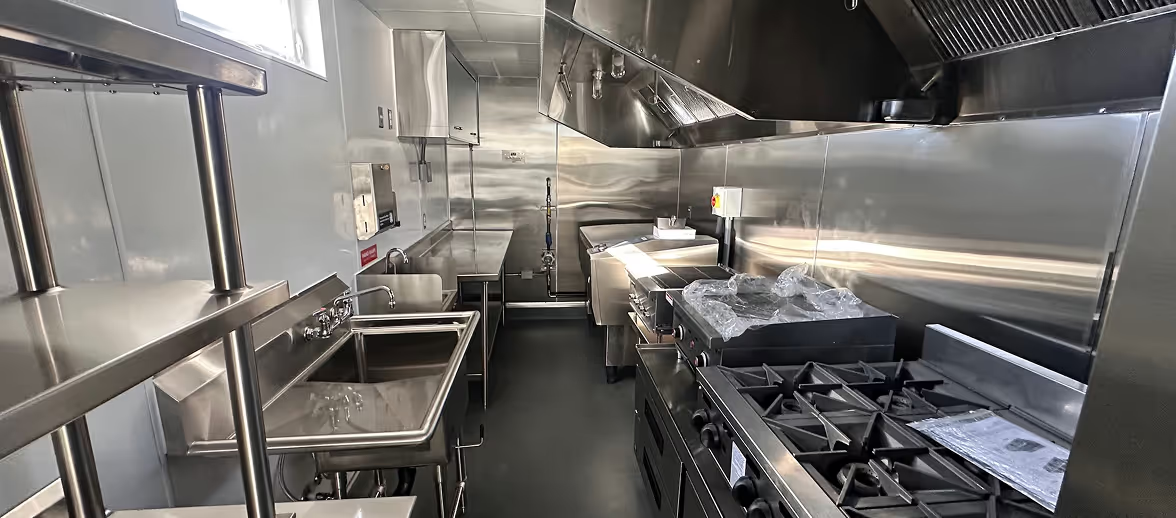
Should this mobile kitchen run on natural gas or propane? It's the first technical question after the rental contract is signed, and most comparison articles answer it with per-unit cost. That framing is wrong. The natural gas vs propane mobile kitchen decision turns on site infrastructure, deployment duration, and equipment calibration — not on the headline price per cubic foot. A hotel with an active utility tap and a resort with no gas main are different problems with different answers. This guide walks through the physical differences that drive the choice, the site scenarios where each fuel wins, the real per-BTU economics, and a decision framework hospitality operators can take to a pre-deployment site walk.
Why the Fuel Choice Matters for a Hospitality-Grade Mobile Kitchen
For a brick-and-mortar restaurant, fuel is a one-time architectural decision. For a mobile kitchen trailer deployed at a hotel, resort, or club, it's a deployment decision — one that touches site planning, AHJ coordination, equipment calibration, fuel logistics, and total cost. A nine-month renovation hits a different cost curve than a 14-day seasonal event. The propane-side compliance picture — NFPA 58, leak detection, tank siting — is covered in our propane safety and regulations guide; this article is the decision upstream of that work.
How Natural Gas and Propane Differ at a Mobile Kitchen
Energy Density and BTU Output
Propane is the denser fuel. One cubic foot of propane delivers approximately 2,500 BTU; one cubic foot of natural gas delivers approximately 1,030 BTU. According to the U.S. Department of Energy's Alternative Fuels Data Center, one gallon of liquid propane contains about 91,500 BTU. The practical implication: a 600,000 BTU/hr connected load draws roughly 583 cubic feet of natural gas per hour or 240 cubic feet of propane vapor (about 6.5 gallons of liquid propane per hour at full draw). Density affects volume through the manifold — not burner efficiency, which is similar across both fuels.
Supply Mode — Pipeline vs. Cylinder or Tank
Natural gas arrives continuously through a utility pipeline. The American Gas Association documents the U.S. distribution network, but coverage thins outside developed urban and suburban corridors. Connecting a mobile kitchen requires a tap at the meter, a flexible regulated line to the unit, and AHJ approval of the gas piping.
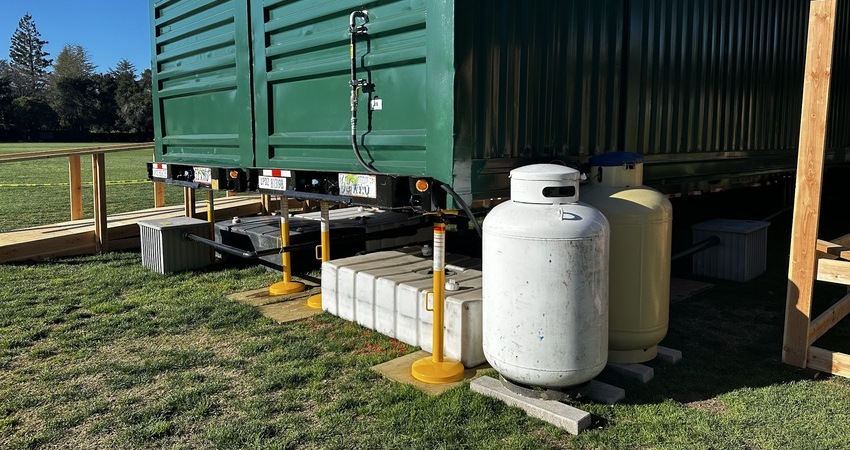
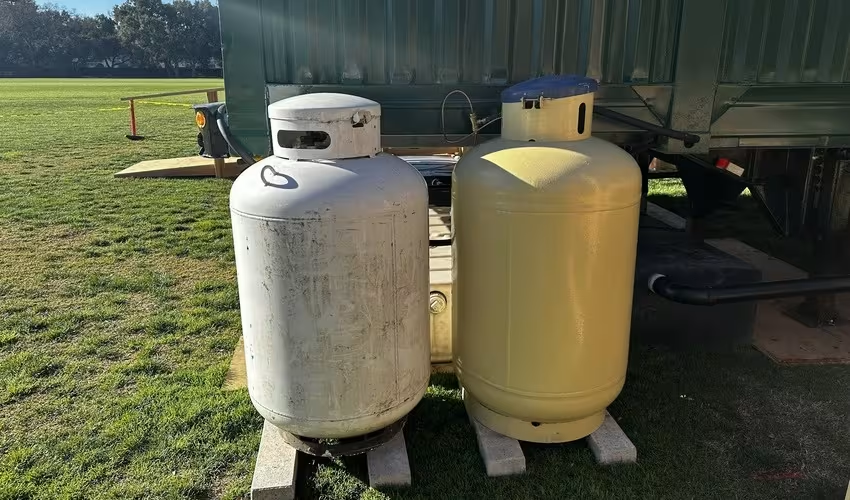
Propane arrives on-site in a DOT cylinder bank or an ASME bulk tank, with scheduled refills against a fuel supply contract. The Propane Education and Research Council maintains foodservice-specific safety and operations resources for this supply model. Supply independence is propane's defining advantage.
Vapor Density and Leak Behavior
Natural gas has a specific gravity of approximately 0.6 — lighter than air. In a leak, it rises and dissipates, and detectors mount near the ceiling. Propane has a specific gravity of approximately 1.5 — heavier than air. It pools at floor level, which is why NFPA 58 requires LP-gas detectors near the floor.
Note: For mobile kitchens parked over or near below-grade structures — underground garages, basement service docks, drainage trenches — propane's pooling behavior introduces site-planning constraints that natural gas avoids.
Operating Pressure and Equipment Calibration
Commercial cooking equipment runs at fuel-specific pressures. Natural gas appliances operate at about 7 inches water column (WC) at the manifold; propane appliances run at about 11 inches WC, and orifice diameters differ by roughly 30% between fuels. A range, oven, or fryer factory-built for natural gas cannot be field-swapped to propane without a manufacturer-certified conversion kit and BTU recalibration documented for the AHJ.
When Natural Gas Is the Better Fit for a Mobile Kitchen Deployment
Natural gas wins when the site supports it and the deployment justifies the connection work.
- Urban hotel renovations with an active gas tap.
When the building's gas service survives the renovation scope, tapping it avoids fuel logistics entirely. The hotels and resorts market sees this scenario most often.
- Long-duration deployments (nine months and up).
Per-BTU economics favor natural gas as runtime accumulates and the upfront tap cost amortizes.
- Continuous-service properties.
Sites that can't accept refueling-window interruptions — high-volume breakfast service, 24-hour hospitals, senior living dining — benefit from pipeline reliability.
- Properties under electrification or carbon-accounting policies.
Where the corporate ESG framework allows natural gas with offsets but disfavors propane logistics, natural gas can win on accounting grounds even when the per-BTU math is closer.
When Propane Is the Better Fit for a Mobile Kitchen Deployment
Propane wins when site infrastructure isn't there, time is short, or the renovation disrupts the building's gas service.
- Resorts and clubs with no nearby gas main.
Many country clubs and destination resorts sit beyond utility distribution; propane is the default rather than the alternative.
- Seasonal and emergency deployments.
Speed-to-deploy is propane's strongest hand — a tank arrives on a flatbed and the unit is operational the same day.
- Off-grid event venues and disaster relief sites.
Propane plus on-board generation makes the unit fully self-contained.
- Renovations that interrupt the building's gas service.
When the renovation scope includes gas-line replacement or relocation, the mobile kitchen needs an independent fuel supply by definition.
Cost Comparison — Per-BTU Economics Across a 90-Day Deployment
Direct per-unit prices don't compare cleanly. The honest comparison is dollars per million BTU ($/MMBtu), converted from utility rates and propane wholesale prices. U.S. EIA natural gas price data tracks rates by sector and state monthly; EIA weekly heating oil and propane prices cover the propane side. Two conversion shortcuts: natural gas price per therm × 10 = $/MMBtu (so $1.20/therm ≈ $12.00/MMBtu), and propane price per gallon × 10.92 = $/MMBtu (so $2.50/gallon ≈ $27.30/MMBtu).
The table below illustrates a 90-day deployment for a 600,000 BTU/hr connected load at 10 hours per day, 50% duty cycle (about 270 MMBtu total). Real numbers vary widely by market, season, and rate class — treat this as a structural comparison, not a quote.
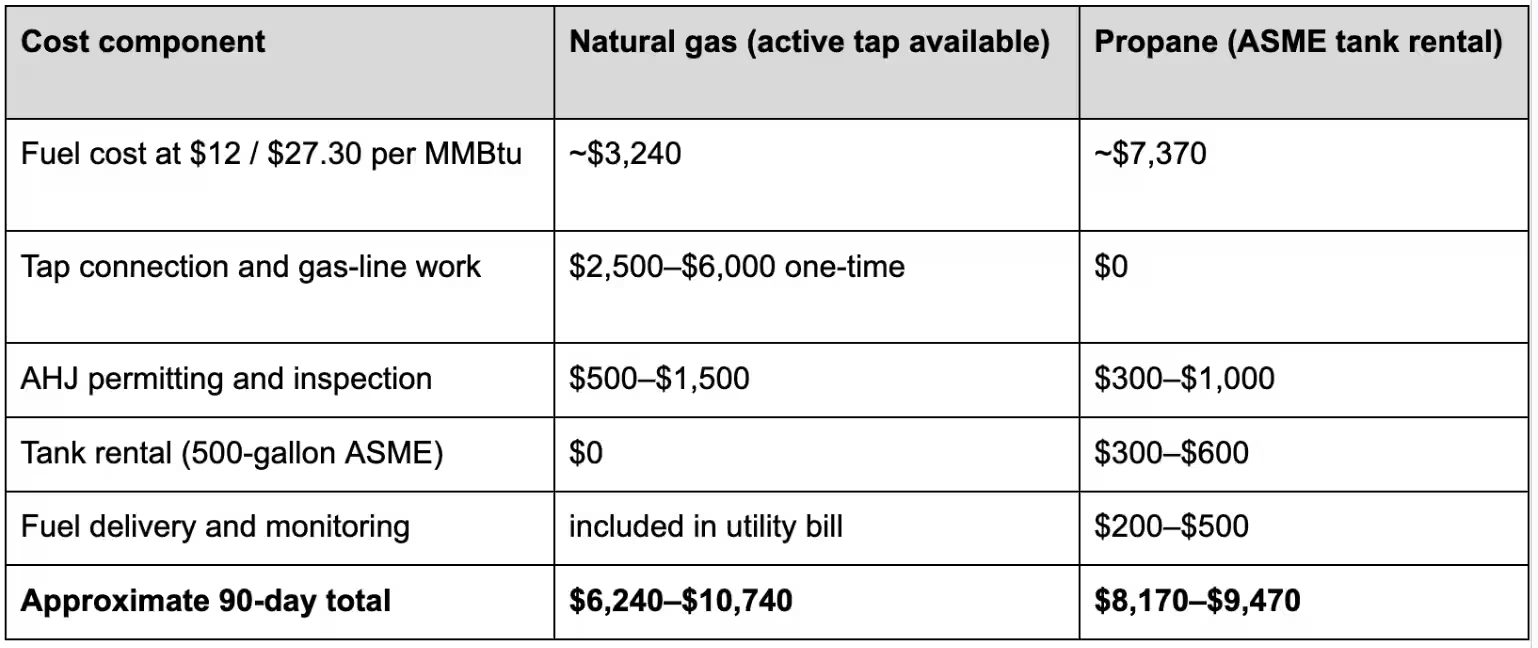
Below about six months, the gas-line work doesn't amortize and propane often wins on total cost despite the higher per-BTU price; past six months, natural gas typically pulls ahead — when a tap is available. The WebstaurantStore foodservice comparison reaches similar conclusions for permanent installations.
Tip: Request both fuel quotes before signing the rental contract. The pre-deployment site walk on fuel availability is the input that drives the right number — not assumptions about which fuel is "usually" cheaper.
Equipment Considerations — Orifices, Regulators, and Conversion
Why Off-the-Shelf Equipment Isn't Interchangeable
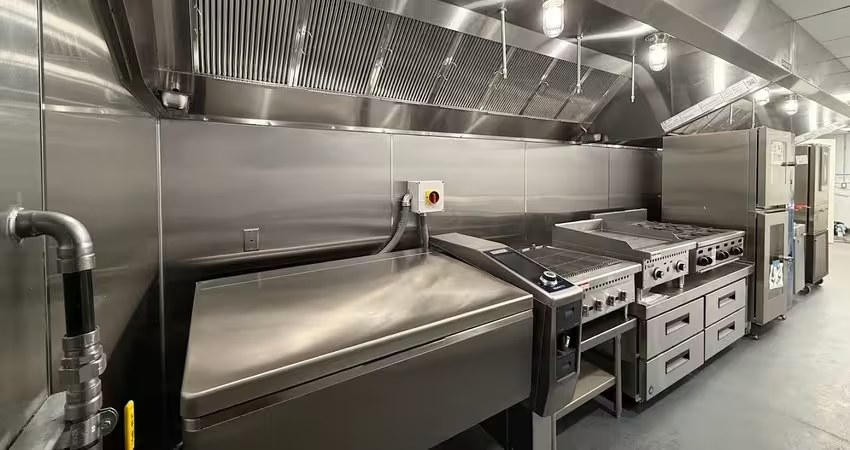
Different operating pressures, different orifice diameters, different regulator stages — the fuel-side equipment on a commercial kitchen is fuel-specific. A field swap requires the manufacturer's certified conversion kit, a licensed gas technician, BTU recalibration, and documented AHJ sign-off. On a deployment timeline, this is days of work and a paper trail nobody wants to assemble at the last minute.
What a Purpose-Built Mobile Kitchen Handles
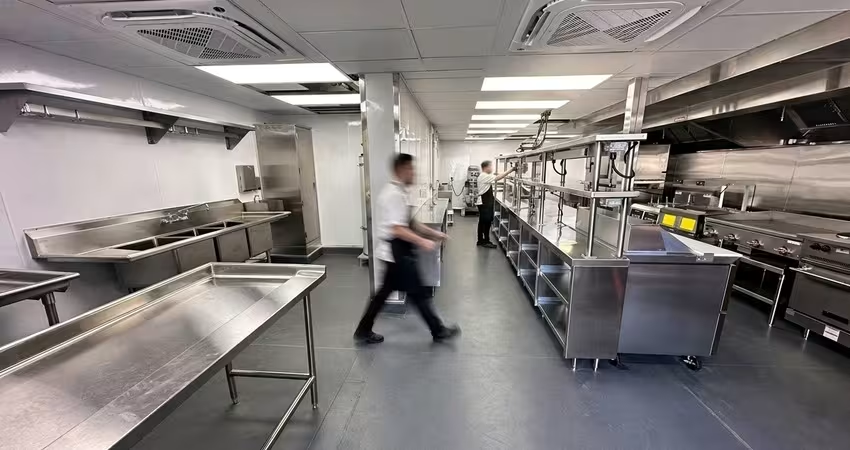
A turnkey rental provider configures the fuel system at the manufacturing stage — regulators, manifolds, hose assemblies, leak detection, and appliance orifices all matched to the specified fuel before the unit ships. Mobile Culinaire builds units this way by default, the same way the electrical system and water supply are configured for the deployment site rather than adapted in the field.
A Decision Framework for Hospitality Operators
Walk through these questions before signing a rental contract — they're the inputs that drive a defensible natural gas vs propane mobile kitchen decision:
- Is there an active natural gas tap on the deployment site, and will it survive the renovation scope? Yes to both moves natural gas into contention.
- What's the deployment duration? Under six months tends to favor propane on total cost; longer tends to favor natural gas with a tap available.
- What's the AHJ's appetite for new gas-line work versus propane tank siting? Some jurisdictions move faster on one than the other; ask the fire marshal during scoping.
- Is fuel delivery access available for propane refills? Tight urban sites can complicate refill logistics in ways that don't show up until week three.
- Is the property under an electrification or carbon-accounting policy that affects the fuel choice independent of cost?
- Does the rental provider's project management handle the fuel-side coordination as part of the scope, or is it a separate workstream the operator inherits?
A purpose-built provider folds these questions into the pre-deployment site assessment. A retrofitted-trailer rental leaves them to the operator under deadline pressure.
Mobile Culinaire's Rental Fleet Runs on Propane
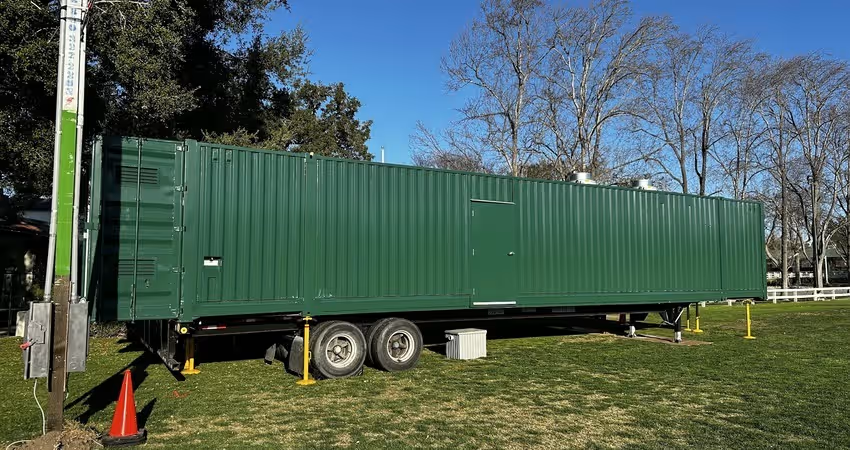
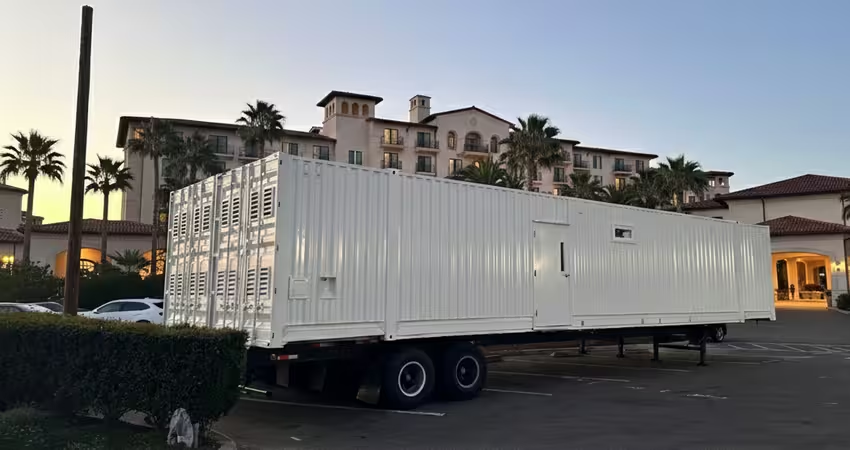
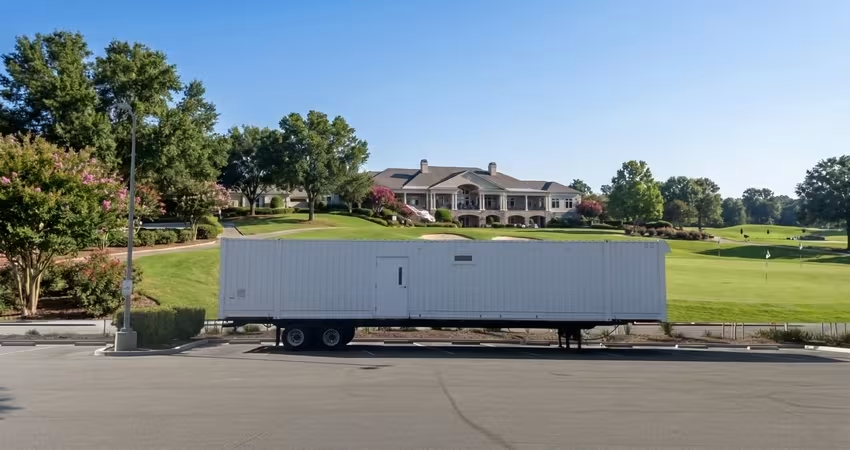
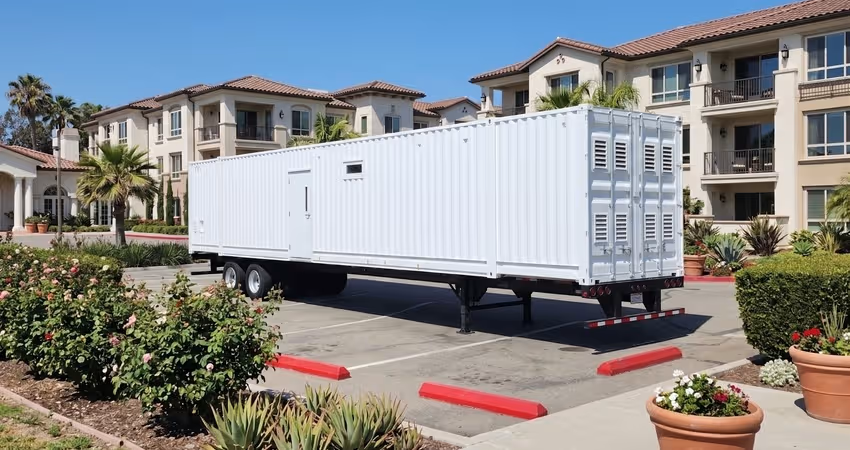
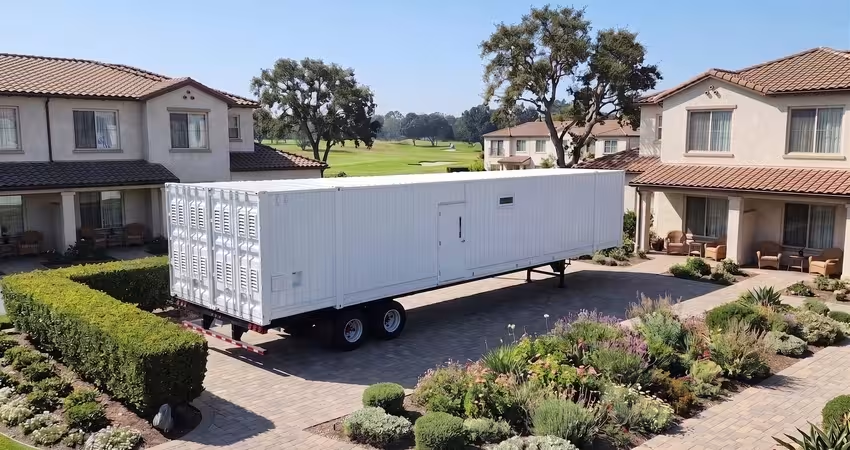
Mobile Culinaire's rental units are propane-powered. The fuel system, regulators, manifolds, leak detection, and appliance orifices are all engineered and calibrated for propane at the manufacturing stage, not adapted in the field. That aligns directly with where propane wins in the decision framework above: hospitality sites without an active gas main, renovations that interrupt utility service, seasonal deployments where speed-to-deploy matters, and off-grid event venues. See the 32', 40', 53', and 2×53' models at the mobile kitchen page, or browse recent hospitality deployments in the project showcase.
Disclaimer
This article is for informational purposes only and does not constitute legal, engineering, fire-protection, or code-compliance advice. Fuel selection for mobile kitchen trailers depends on jurisdiction, site conditions, AHJ requirements, rate class, and utility availability. Always consult your local fire marshal, licensed gas professionals, utility provider, and applicable NFPA, OSHA, DOT, EIA, and local code requirements before deploying or operating a mobile commercial kitchen.
People Also Ask (FAQ)
Can you convert a mobile kitchen from natural gas to propane?
Yes, but it's not a field swap. Commercial gas cooking equipment uses different orifices, regulators, and operating pressures depending on fuel — propane runs at about 11 inches WC, natural gas at about 7 inches WC, with orifice diameters differing by roughly 30%. Conversion requires factory-certified kits, a licensed technician, and BTU recalibration documented for the AHJ. Purpose-built mobile kitchens are typically delivered pre-configured for the fuel specified in the rental scope.
How much propane does a commercial mobile kitchen use per day?
A full-service mobile kitchen with a connected load near 600,000 BTU/hr runs at roughly 35–50 gallons of propane per day under realistic duty cycles, with a theoretical maximum around 84 gallons at sustained full load. A 90-day deployment at the midpoint projects approximately 3,800 gallons total — typically supplied by a 500-gallon ASME tank with scheduled refills, or a 1,000-gallon tank for extended deployments.
Is natural gas cheaper than propane for commercial kitchens?
On a per-BTU basis, natural gas is usually cheaper in markets where utility infrastructure is in place — propane delivers 2.44× more BTUs per cubic foot but typically costs more per unit of energy. The real answer depends on whether the deployment site has a natural-gas tap available; if a new gas line, meter, and AHJ permitting are required, the upfront cost can erase the per-BTU savings on deployments under six months. Propane wins on flexibility, supply independence, and speed-to-deploy.

Testimonial

"What is standing out when you look at the mobile kitchen operation is the efficiency that we can really achieve because it's built for that."
Tell us about your kitchen needs and request a quote.
.png)
Turnkey mobile kitchen
Proudly made in-house in the USA
Commercial grade kitchen equipment
Code-compliant
Trusted by Industry Leaders