.gif)
.avif)
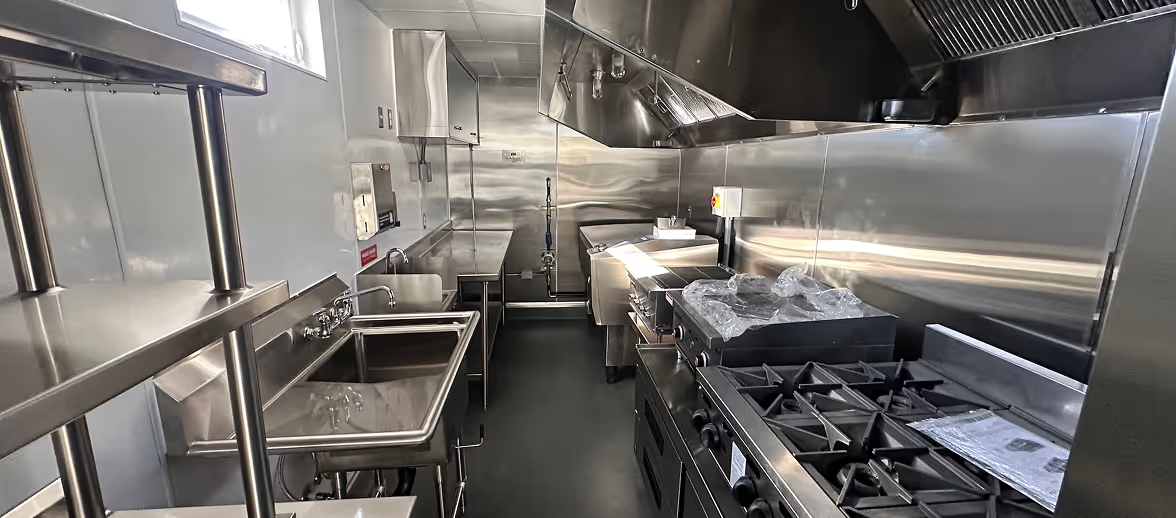
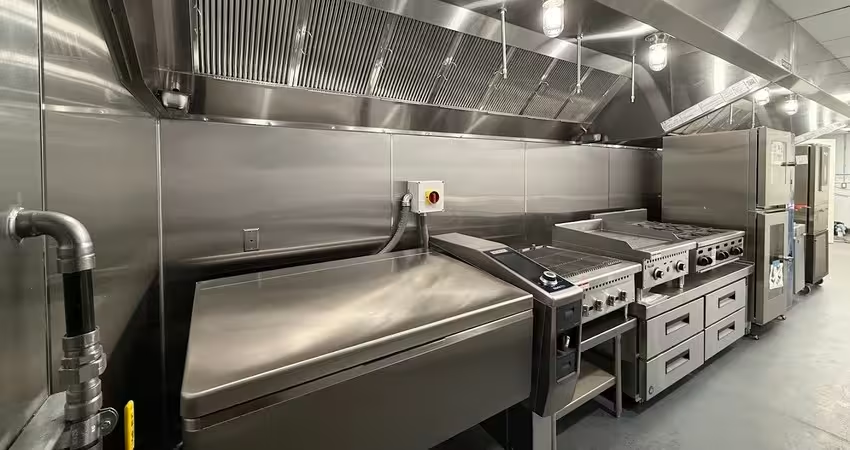
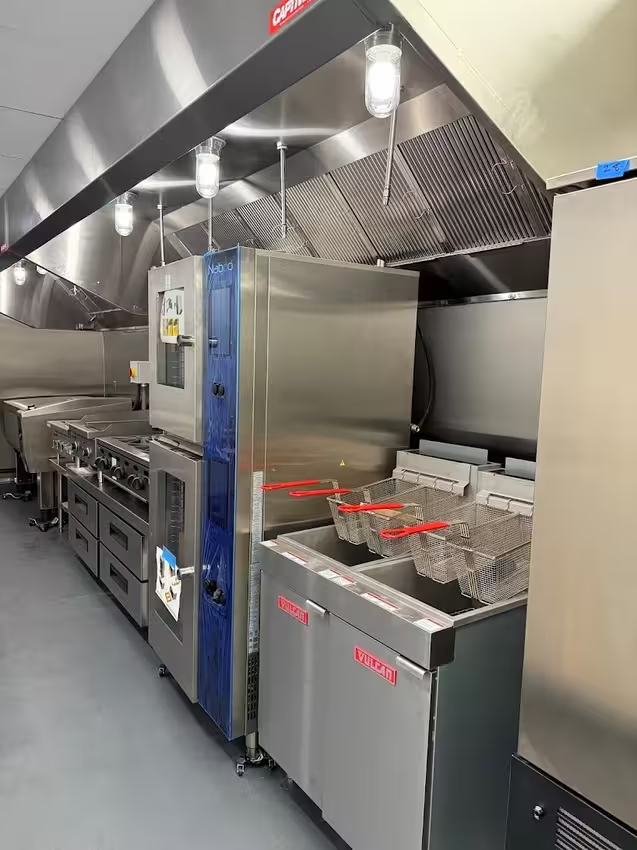
A six-burner range, a charbroiler, and a fryer bank can throw off more than 150,000 BTU per hour of waste heat into a 320-square-foot unit before the summer sun adds its own load through the roof. Inside an under-insulated trailer running full service, temperatures climb fast enough to push HVAC past design capacity and chefs past their tolerance. Mobile kitchen trailer insulation isn't a comfort upgrade — it's a performance specification.
This guide covers the materials that meet that brief, what they're rated for, and what operators should verify before signing a rental.
Why Insulation Matters More in a Mobile Kitchen Than Most Operators Expect
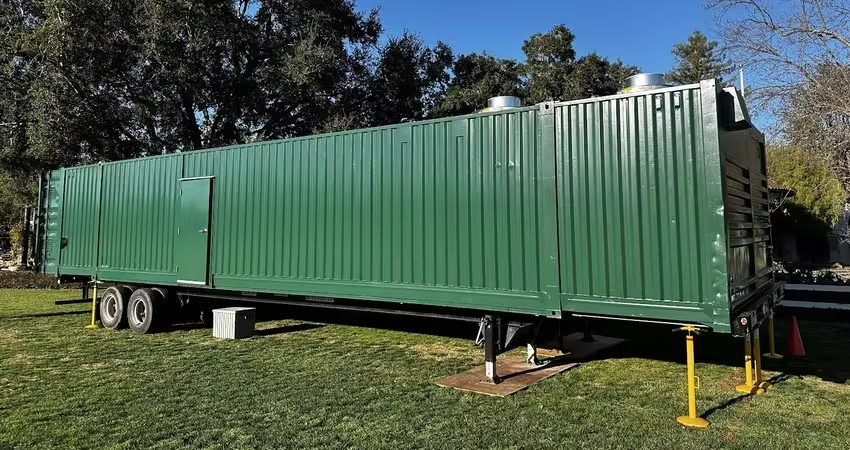
A permanent commercial kitchen has a heavy envelope absorbing the cooking line's thermal swings. A mobile unit doesn't. The wall is 3 to 4 inches of assembly between a stainless interior and a steel exterior skin, with the cooking line sitting directly inside it.
Three performance vectors drive every mobile kitchen trailer insulation decision:
- Thermal load — radiant and convective heat from cooking equipment, plus climate-driven gain or loss
- Fire performance — surface burning behavior near high-BTU appliances and hoods
- Moisture and washdown tolerance — humidity, condensation, and daily sanitation
A cargo-trailer-grade approach — fiberglass between thin-gauge ribs, vapor-permeable, air-leaky — fails on at least two of those vectors before service starts.
How Mobile Kitchen Trailer Insulation Performance Is Measured
R-Value and the Climate Zone Question
R-value measures thermal resistance per inch. The right target depends on where the unit deploys. The International Energy Conservation Code Chapter 4 and ASHRAE Standard 90.1 set commercial envelope requirements by climate zone — a roof that needs R-20 in CZ 2 jumps to R-30+ in CZ 6 on the same assembly. The U.S. Department of Energy's insulation guidance covers the underlying principles.
A unit that deploys at a Florida resort in February and a Minnesota club in October has to perform across both. Purpose-built units are specified for the upper end so one asset works nationally.
Note: R-value alone misleads in steel-framed assemblies. Thermal bridging through framing cuts effective R-value by 30–50% without continuous insulation.
Fire Performance — ASTM E84 and NFPA 96
Insulation in a commercial kitchen has to answer for its fire behavior. The governing test is ASTM E84, which produces a Flame Spread Index (FSI) and a Smoke Developed Index (SDI). The IBC uses those numbers to assign a Class rating.
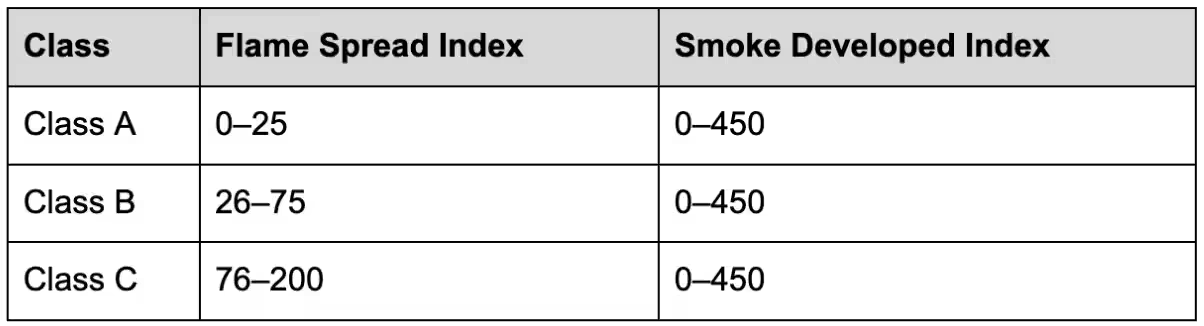
Class A is the working spec for interior wall and ceiling finishes in a commercial kitchen. NFPA 96 sets clearance-to-combustibles requirements around Type I hoods — insulation inside those envelopes must be non-combustible, not just Class A. The fire safety article covers the broader hood and suppression context.
Moisture, Vapor, and Washdown
Commercial kitchens are wet. Cooking steam, condensation, and daily washdown push moisture into wall cavities. Open-cell foams and unfaced fiber batts absorb water, lose R-value, and become a microbial liability across a multi-month deployment. Closed-cell foams and dense mineral products tolerate the exposure — one of the operational realities the staff training playbook flags.
Mobile Kitchen Trailer Insulation Materials Used in Purpose-Built Units
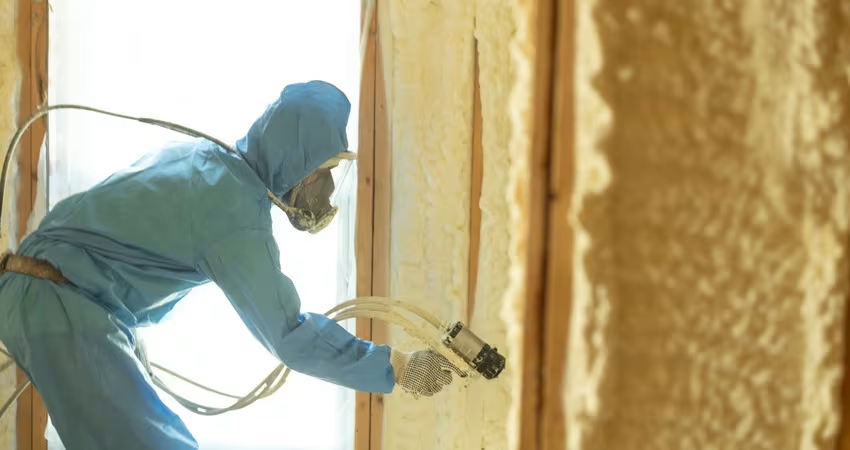
Closed-Cell Spray Polyurethane Foam (SPF)
Closed-cell SPF delivers R-6 to R-7 per inch — the highest practical R-value per inch in mobile applications. The Spray Polyurethane Foam Alliance documents its thermal, air-sealing, and structural-rigidity properties. In a steel-framed mobile kitchen, the air-sealing is most of the value: a continuous foam shell eliminates the convective heat loss fiber insulations leave behind, and the closed-cell structure refuses to absorb water.
Trade-offs: highest material cost per board-foot, code-required ignition or thermal barrier in occupied spaces, and trained-installer dependency. Routine in purpose-built manufacturing; rarely done right in retrofitted trailers.
Mineral Wool (Stone Wool)
Mineral wool runs about R-4 per inch. The headline property isn't R-value — it's fire performance. Mineral wool is non-combustible, holds Class A under ASTM E84, and tolerates temperatures well above where polymer insulations soften. That makes it the working choice for any mobile kitchen wall insulation near a Type I hood or inside NFPA 96 clearance envelopes.
Secondary benefits matter in a mobile kitchen:
- Acoustic absorption when refrigeration, exhaust, and cooking equipment all run in a small footprint
- Moisture resistance — water-shedding rather than water-absorbing
- Dimensional stability — doesn't settle under road vibration
.avif)
Insulated Metal Panels (IMPs)
IMPs are factory-bonded sandwich assemblies — two steel skins around a polyisocyanurate (PIR) foam core. Per-inch R-values run R-7 to R-8 in PIR cores. IMPs show up in two places: the walk-in cooler and freezer envelopes (panel R-values from R-32 to R-48 are standard) and, in some designs, the primary exterior wall and roof.
The case for IMPs is integration — one panel delivers thermal layer, air barrier, vapor barrier, and finish in a single assembly. The dimensional stability matters for a unit re-leveled across deployments, a process the setup and leveling article covers.
.avif)
Rigid Polyiso and XPS Board
Rigid polyiso lands at R-5 to R-6.5 per inch; XPS at roughly R-5. Both show up as continuous insulation — a layer outboard of the steel framing that breaks the thermal bridge through the structure. Continuous insulation is how commercial assemblies hit ASHRAE 90.1 targets in colder zones without adding wall thickness that would push the trailer past transport-width limits.
.avif)
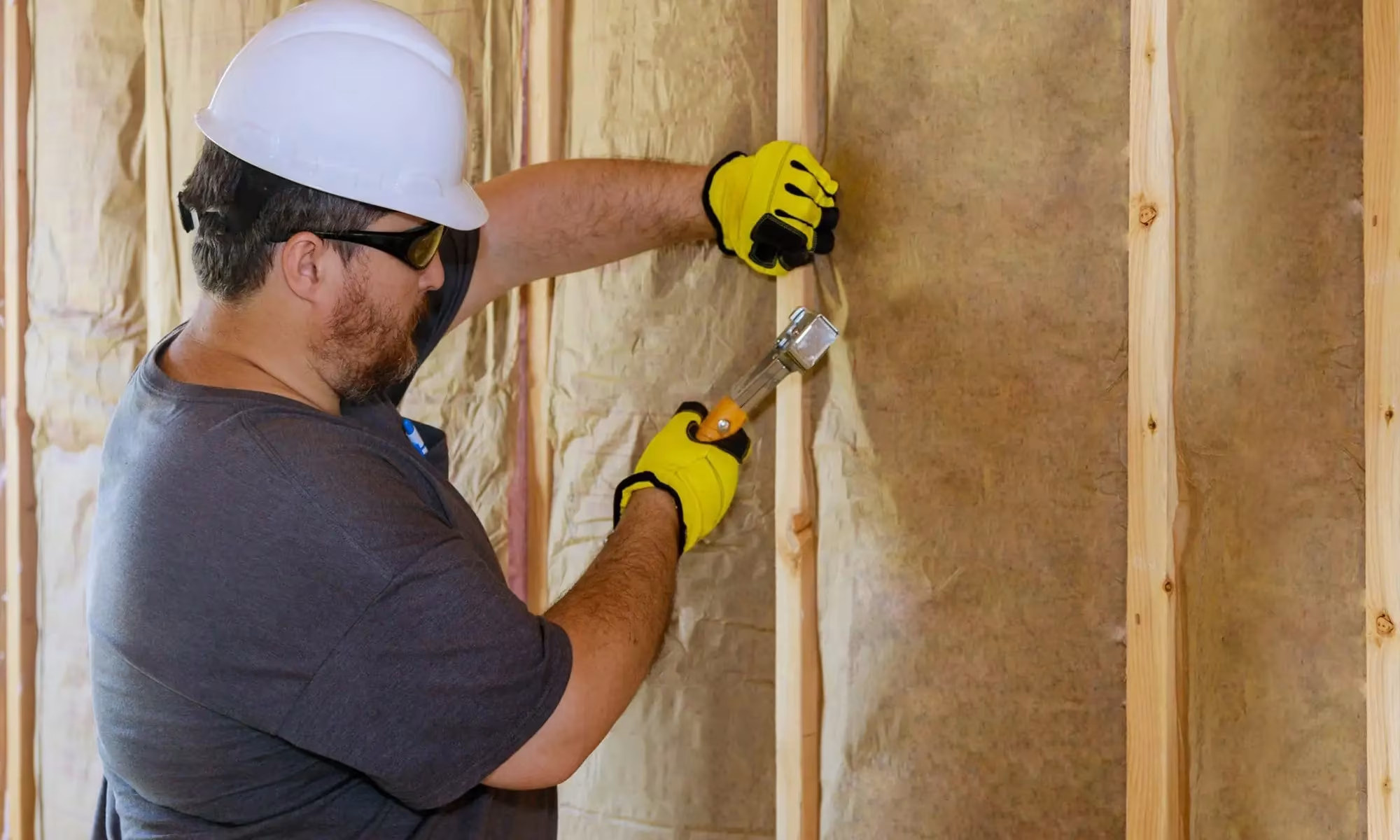
Fiberglass Batt — Where It Falls Short
Fiberglass is the default in cheap retrofitted cargo trailers and the wrong starting point for mobile kitchen trailer insulation in a commercial context. The reasons are documented across the commercial insulation literature, including National Insulation Association technical resources:
- Air permeable — convective loops inside the cavity erode rated R-value
- Water-absorbing — washdown and condensation push it toward microbial growth
- Settles under vibration — road service opens cavities at the top of walls
- Marginal Class A performance — unfaced batt assemblies don't deliver Class A without additional engineered facings
Fine for light residential and DIY-grade builds. Not for a hospitality-grade rental.
How a Hospitality-Grade Wall Assembly Actually Performs
Floor, Wall, and Roof — Different Demands
- Roof sees the largest radiant gain in summer and condensation risk in winter. Continuous insulation outboard plus closed-cell SPF below the deck is typical.
- Walls carry the most assembly variety. Steel framing with closed-cell SPF in the cavity, plus continuous polyiso or an IMP layer outboard, hits ASHRAE 90.1 targets in most zones.
- Floor has thermal bridging through chassis steel and exposure to ground temperatures. Closed-cell SPF under the deck and rigid board between chassis members is the hospitality-grade spec.
Thermal Bridging Through Steel Framing
A wall labeled "R-19" may deliver effective R-13 once thermal bridging through steel studs is accounted for. The eCFR commercial energy provisions and ASHRAE 90.1 account for this with separate U-factor tables for steel-frame versus mass walls. Continuous insulation outboard of framing is the remedy — and specifying nominal R-value without specifying continuity is the most common spec mistake in retrofitted units.
The Walk-In Inside the Unit
The walk-in cooler and freezer hold their own envelope. IMP construction with PIR cores hits R-32 (cooler) to R-48 (freezer), holding those temperatures while the cooking line throws off the BTU loads that drive the fuel selection conversation. The two envelopes are designed against each other.
What Operators Should Verify Before Signing
A short list of mobile kitchen trailer insulation questions every hospitality operator should put to a provider:
Tip: Most of these questions get clear answers from a purpose-built provider in five minutes. If they take longer, that's the answer.
- Wall, roof, and floor R-value — nominal or effective? Effective accounts for thermal bridging; nominal numbers aren't comparable without that adjustment.
- ASTM E84 Class rating for all insulation within hood clearance envelopes? Class A and non-combustible behavior is the working spec.
- Closed-cell SPF in the cavity — and what ignition or thermal barrier sits in front of it? Required by code in occupied commercial spaces.
- Walk-in cooler and freezer envelope R-value and IMP core material? PIR cores in the R-7+ per inch range are the benchmark.
- What climate zones is the unit specified for? A unit specified to CZ 6 performs anywhere; one specified to CZ 2 struggles north of the Sun Belt.
- What does third-party inspection documentation cover for the envelope? Documented, not assumed.
A purpose-built Mobile Culinaire kitchen answers all of these on a spec sheet. A retrofitted trailer rarely answers any of them clearly — and that's the operational difference an executive chef or F&B director feels in week three of service.
See How Envelope Decisions Show Up in Real Deployments
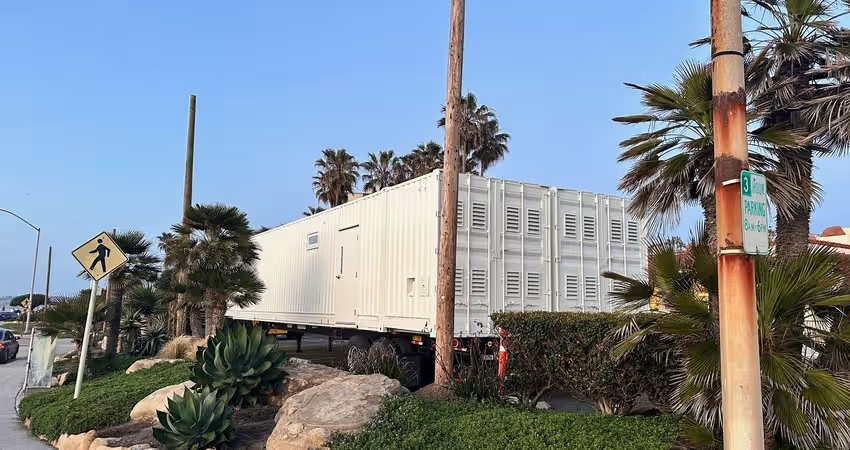
Specifying mobile kitchen trailer insulation correctly is what separates a unit that holds service quality through a 120-day renovation from one losing chefs by week three. The choices above — closed-cell SPF in the cavity, mineral wool near the cooking line, IMPs on the cold envelope, continuous insulation outboard of steel framing — are the working spec across the hotels, resorts, and clubs that depend on Mobile Culinaire's purpose-built fleet.
To see how those specifications translate at real properties, browse the project showcase. For technical questions specific to a deployment site or climate zone, the team is available through the contact page.
Disclaimer
This article is for informational purposes only and does not constitute engineering, fire-protection, or code-compliance advice. Insulation specifications for mobile kitchen trailers depend on jurisdiction, climate zone, deployment duration, equipment load, and AHJ requirements. Always consult licensed engineers, building officials, and applicable IECC, ASHRAE, NFPA, ASTM, and local code requirements before specifying or deploying a mobile commercial kitchen.
People Also Ask (FAQ)
What R-value does a mobile kitchen trailer need?
There's no universal number. ASHRAE 90.1 and IECC C402 scale commercial envelope requirements with climate zone — roof assemblies range from R-20 in Zone 2 up to R-30+ in Zone 6. For a unit that deploys across zones in a single year, hospitality-grade mobile kitchen trailer insulation specs target the upper end — typically R-30+ on the roof, R-19 to R-25 effective on walls, and continuous insulation across steel-framed assemblies. The right answer is the spec that performs at the coldest deployment site on the calendar.
Is spray foam safe to use inside a commercial kitchen trailer?
Closed-cell SPF is widely used in purpose-built mobile kitchens because it delivers R-6 to R-7 per inch and acts as an air and moisture barrier. Codes require an ignition or thermal barrier between cured foam and the occupied interior, and the assembly has to clear NFPA 96 clearance-to-combustibles distances from hoods and cooking equipment. With those conditions met and a trained applicator, it's safe and standard. Field-sprayed foam in a retrofitted trailer without those controls is a different conversation.
How does insulation affect a mobile kitchen's HVAC sizing?
A tighter, better-insulated envelope reduces cooling load, letting a right-sized HVAC system hold setpoint during full-service production. An under-insulated trailer needs an oversized AC that still cycles past capacity on summer days and shortens equipment life. Envelope decisions are made before HVAC sizing — and the cost difference shows up across a six-month deployment, not just on the spec sheet.

Testimonial

"What is standing out when you look at the mobile kitchen operation is the efficiency that we can really achieve because it's built for that."
Tell us about your kitchen needs and request a quote.
.png)
Turnkey mobile kitchen
Proudly made in-house in the USA
Commercial grade kitchen equipment
Code-compliant
Trusted by Industry Leaders