.gif)
Are you spending $50,000+ annually on commercial kitchen rent while watching property values soar? The rent-versus-own decision for commercial kitchen space represents one of the largest financial commitments hospitality operations face, yet many executives make this choice without fully understanding the long-term implications. With commercial real estate costs rising 15-20% in major markets over the past three years, the traditional wisdom of "always buy" is being challenged by new operational realities. This analysis will break down the true costs, tax implications, and strategic considerations that determine when renting a commercial kitchen makes more financial sense than ownership—helping you make a data-driven decision that aligns with your operation's growth trajectory and capital allocation strategy.

Financial Analysis: Capital Requirements and Cash Flow Impact
The commercial kitchen rent vs own decision fundamentally comes down to capital allocation and cash flow management. Purchasing commercial kitchen space typically demands 20-30% down payment on property costs ranging from $150-400 per square foot, depending on market conditions. Add equipment purchases ($80,000-$300,000), renovation expenses, and closing costs, and total upfront investment can exceed $500,000 for a mid-sized operation.
Rental arrangements eliminate these capital barriers, requiring only first month's rent, security deposits, and minimal equipment installations. This preserved capital can generate returns through core business investments—menu development, staff training, marketing initiatives, or expansion into additional revenue streams.
Tip: Use the SBA startup cost calculator to determine whether your available capital would generate higher returns invested in kitchen ownership versus operational improvements.
According to the National Restaurant Association industry report, operators who rent kitchen facilities report 18% better cash flow management compared to owners dealing with mortgage payments, property taxes, and maintenance reserves.
Regulatory Compliance and Risk Management
Ownership transfers all regulatory compliance responsibilities to the operator. This includes navigating FDA Food Code requirements, maintaining NFPA 96 ventilation standards, and ensuring ongoing NSF commercial kitchen standards compliance.
Commercial kitchen rent vs own scenarios differ dramatically in compliance burden. Rental providers typically maintain all required certifications, handle inspection schedules, and absorb costs for compliance upgrades. Owners face potential six-figure expenses when health departments mandate ventilation system updates or when fire codes require new suppression equipment.
Example: A hotel owner recently spent $125,000 upgrading their kitchen's ventilation system to meet updated local codes—an unexpected expense that would have been the landlord's responsibility in a rental scenario.
Understanding commercial kitchen renovation costs becomes crucial for owners who must budget for mandatory compliance improvements throughout their facility's lifecycle.

Operational Flexibility and Scalability
Fixed kitchen ownership constrains operational adaptability. Seasonal demand fluctuations, special event requirements, or business growth often outpace existing kitchen capacity. Owners face expensive renovation projects or underutilized space during slower periods.
Rental arrangements provide scalable solutions aligned with actual demand. Operations can expand kitchen capacity during peak seasons, contract during off-periods, or relocate entirely when market conditions change. This flexibility proves especially valuable for businesses with unpredictable volume patterns.
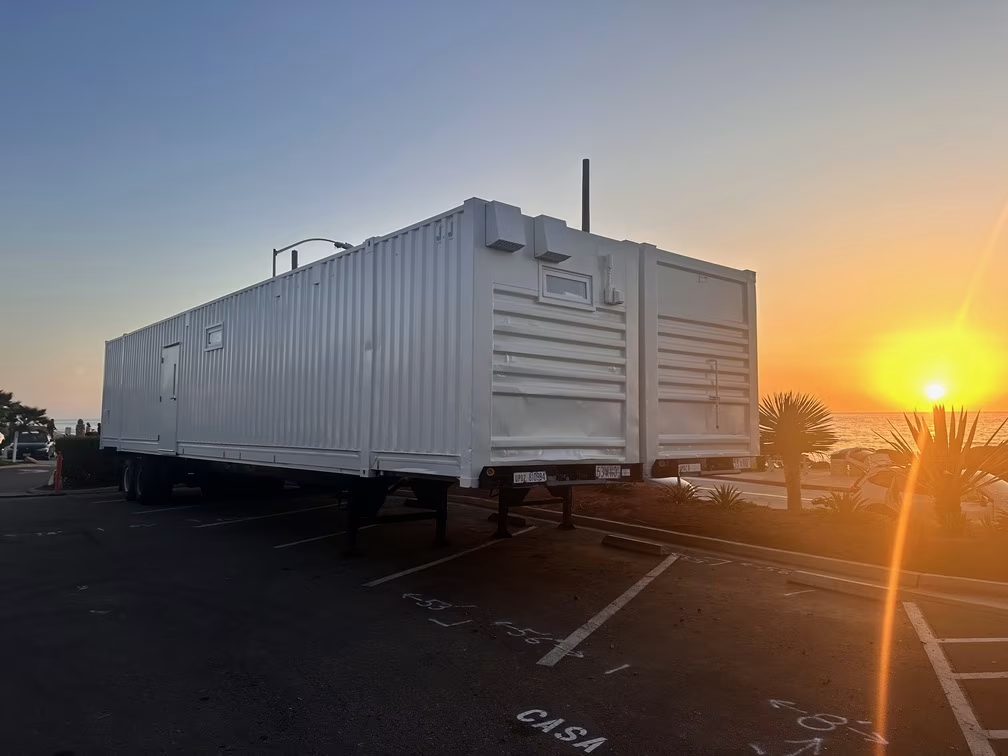
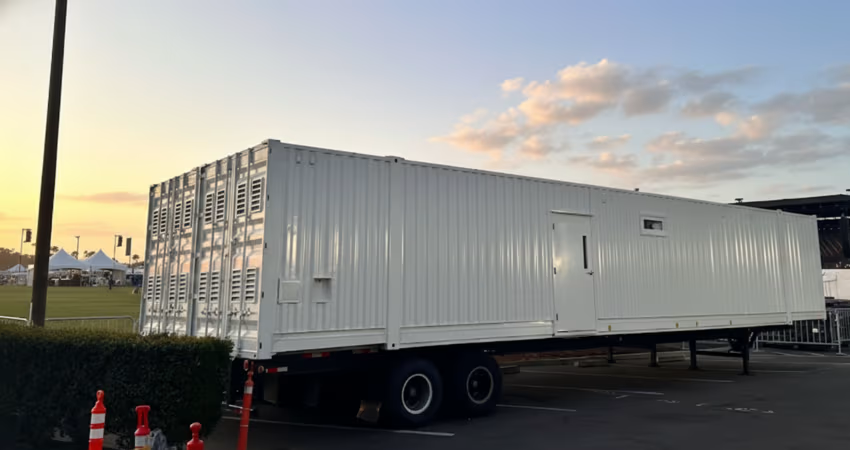
Note: Mobile kitchen rental solutions offer ultimate flexibility, allowing operations to deploy full kitchen functionality anywhere needed without permanent infrastructure investments.
Hotels managing seasonal occupancy swings particularly benefit from rental flexibility. Rather than maintaining oversized kitchens year-round, they can supplement permanent facilities with temporary capacity during peak periods, optimizing both space utilization and operational costs.
Strategic Location Advantages
Rental options enable testing new markets without permanent commitments. Food service operators can establish presence in emerging neighborhoods, seasonal destinations, or special event locations through short-term arrangements.
This approach allows market validation before major capital deployment. Successful locations justify permanent investment, while unsuccessful ventures can be discontinued with minimal financial impact. Who uses mobile kitchens demonstrates how savvy operators leverage rental flexibility for strategic expansion.
Maintenance and Operational Risk Distribution
Kitchen ownership concentrates all equipment and facility risks on the operator. HVAC failures, plumbing emergencies, electrical problems, and structural issues become immediate operational crises requiring rapid capital deployment.
Annual maintenance costs for owned commercial kitchens typically range from $15,000-$50,000, excluding emergency repairs. Equipment replacement cycles, utility system upgrades, and preventive maintenance programs demand constant attention and budgeting.
Rental agreements typically transfer these responsibilities to property owners or specialized providers. This risk distribution protects operators from unexpected capital requirements and operational disruptions. Understanding the hidden costs of kitchen shutdowns reveals how ownership risks compound during equipment failures.
Tip: Calculate total cost of ownership including maintenance reserves, insurance, utilities, and emergency repair funds when comparing rental versus purchase options.

Tax Implications and Financial Optimization
Tax treatment differs significantly between rental and ownership scenarios. IRS Publication 946 on depreciation outlines ownership benefits including depreciation deductions, mortgage interest deductions, and potential capital appreciation.
However, rental payments provide immediate tax deductions as operating expenses, improving current-year cash flow. This immediate benefit often outweighs long-term depreciation advantages, especially for operations with strong growth opportunities requiring capital reinvestment.
Commercial kitchen rent vs own tax optimization depends on individual business circumstances. Companies with substantial profits benefit from depreciation deductions, while cash-constrained operations prefer immediate rental expense deductions.
Note: Consult with tax professionals to model both scenarios using your specific financial situation and growth projections.
Strategic Capital Allocation
The most compelling argument for rental involves opportunity cost analysis. Capital deployed in kitchen ownership could generate higher returns through core business improvements—technology upgrades, staff development, marketing expansion, or menu innovation.
Successful hospitality operations typically generate 15-25% returns on operational investments versus 3-8% annual appreciation on commercial real estate. This return differential favors rental arrangements that preserve capital for revenue-generating activities.
Consider how calculate mobile kitchen ROI demonstrates superior returns from flexible rental solutions compared to permanent infrastructure investments.
Example: A catering company invested $200,000 in marketing and staff training instead of kitchen ownership, generating 40% revenue growth that far exceeded potential real estate appreciation.
When Ownership Makes Strategic Sense
Despite rental advantages, certain scenarios favor ownership. Established operations with predictable demand, strong cash positions, and long-term location stability may benefit from ownership's tax advantages and potential appreciation.
Ownership works best when:
- Operations have exceeded 5+ years of consistent profitability
- Location demand is proven with long-term growth prospects
- Available capital cannot generate higher returns in core business activities
- Property appreciation potential exceeds operational investment returns
However, even established operations should consider how ownership affects renovation flexibility. Renovate versus rebuild decisions become more complex when operators own rather than rent their facilities.
Future-Proofing Through Flexibility
Market conditions change rapidly in hospitality. Consumer preferences shift, economic conditions fluctuate, and competitive landscapes evolve. Rental arrangements provide adaptation capabilities that ownership cannot match.
Operations can relocate to emerging markets, expand into new service models, or contract during economic downturns without real estate constraints. This flexibility proves increasingly valuable in uncertain business environments.
Mobile kitchen hospitality solutions exemplify this flexibility, enabling operations to serve diverse locations and events while maintaining consistent service quality. Mobile kitchen hospitality solutions demonstrate how leading operators maintain competitive advantages through operational adaptability.
Understanding various renovation approach strategies becomes less critical when rental arrangements provide turnkey alternatives to complex renovation projects.
People Also Ask (FAQ)
What are the upfront costs of buying versus renting a commercial kitchen?
Purchasing a commercial kitchen typically requires 20-30% down payment plus closing costs, equipment purchases, and renovation expenses that can total $300,000-$1M+ depending on size and location. Renting eliminates these upfront capital requirements, requiring only first month's rent, security deposit, and any necessary equipment installations. Understanding renovation costs is crucial when evaluating the total investment needed for ownership.
How do maintenance costs differ between renting and owning a commercial kitchen?
Kitchen owners bear full responsibility for HVAC systems, plumbing, electrical, structural repairs, and compliance upgrades—costs that can range from $15,000-$50,000 annually for a mid-sized operation. Renters typically pay only for routine maintenance and minor repairs, with major systems and structural issues handled by the landlord. Avoiding common renovation mistakes becomes the owner's responsibility rather than the landlord's.
What tax advantages does each option provide for commercial kitchens?
Ownership offers depreciation deductions, mortgage interest deductions, and potential capital gains benefits upon sale. Rental payments are fully tax-deductible as operating expenses, providing immediate tax relief and improved cash flow. The optimal choice depends on your operation's tax situation, growth plans, and available capital for other revenue-generating investments.
When does renting make more sense than buying a commercial kitchen?
Renting is typically smarter for operations with limited capital, uncertain long-term location needs, seasonal businesses, or when capital can generate higher returns in core business activities. Calculating ROI on temporary kitchen solutions often reveals that flexible arrangements provide better financial outcomes than ownership commitments.
Conclusion
The commercial kitchen rent vs own decision requires careful analysis of capital requirements, operational flexibility, and strategic growth objectives. While ownership offers long-term asset appreciation and tax advantages, rental arrangements provide superior cash flow management, risk distribution, and operational adaptability that align with modern hospitality demands.
Smart operators focus on maximizing returns from core business activities rather than tying capital in real estate assets. For comprehensive kitchen solutions that eliminate ownership complexities while delivering professional-grade facilities, explore our purpose-built mobile kitchen rentals or discuss your specific operational requirements.


Testimonial

"What is standing out when you look at the mobile kitchen operation is the efficiency that we can really achieve because it's built for that."
Tell us about your kitchen needs and request a quote.
.png)
Turnkey mobile kitchen
Proudly made in-house in the USA
Commercial grade kitchen equipment
Code-compliant
Trusted by Industry Leaders