.gif)
%20(1).avif)
Most commercial kitchen renovations take 8-16 weeks longer than initially planned, turning what should be a 12-week project into a 6-month ordeal that devastates revenue and strains operations. The complexity of coordinating permits, utilities, equipment delivery, and health department inspections creates cascading delays that catch even experienced facility managers off guard. Understanding the realistic commercial kitchen renovation timeline—including the hidden phases that contractors often downplay—is critical for maintaining guest satisfaction and financial stability during your upgrade. This comprehensive week-by-week breakdown reveals what actually happens during each phase, the most common delay triggers, and proven strategies to keep your project on track while minimizing operational disruption.
Your commercial kitchen renovation timeline depends on five sequential phases that cannot be rushed or overlapped without creating dangerous quality compromises. A comprehensive renovation planning guide helps facility managers understand these dependencies before committing to contractor promises that seem too good to be true.
Realistic Timeline Expectations for Commercial Kitchen Projects
Standard commercial kitchen renovation timelines range from 8-24 weeks depending on project scope and existing conditions. Quick refreshes involving equipment replacement and cosmetic updates complete in 8-12 weeks. Full renovation projects requiring layout changes, utility upgrades, and structural modifications extend to 16-20 weeks. Complex renovations in historic buildings or facilities with extensive code violations can reach 24+ weeks.
The National Restaurant Association industry trends indicate that 78% of foodservice operators underestimate renovation duration by at least four weeks. This gap stems from unrealistic contractor estimates that exclude permit processing delays, equipment procurement challenges, and multi-agency inspection requirements.
Note: Critical path dependencies mean delays in early phases compound throughout the project. A two-week permit delay becomes a three-week project extension when equipment delivery and inspection schedules must be rescheduled.
Understanding common renovation pitfalls helps operators prepare for the inevitable challenges that emerge during construction. Budget 15-20% schedule contingency and maintain flexible opening dates to accommodate these realities.
Phase 1: Planning and Permits (Weeks 1-6)
Weeks 1-3: Design Development and Documentation
Professional design development transforms conceptual ideas into construction-ready plans. Foodservice consultants create detailed equipment specifications, space planning drawings, and operational flow diagrams. Mechanical engineers calculate load requirements for equipment, electrical engineers size service panels, and structural engineers verify floor loading capacity for heavy appliances.
Executive chef input proves critical during this phase. Menu requirements, service volumes, and operational preferences determine equipment selection and layout configuration. Without detailed operational requirements, contractors make assumptions that create expensive change orders later.
Design documentation includes architectural plans, mechanical drawings, electrical schematics, and equipment cut sheets. Complete documentation prevents field interpretation issues that delay construction and increase costs.
Weeks 4-6: Regulatory Approval Process
Permit acquisition represents the least predictable timeline element. Applications must satisfy multiple agencies: building departments, fire marshals, and health departments. Each agency reviews plans independently, often requesting modifications that require resubmission cycles.
Building permits verify structural adequacy, accessibility compliance, and egress requirements. Fire department reviews focus on ventilation systems, suppression equipment, and life safety features according to NFPA 96 ventilation standards. Health departments evaluate layout compliance with FDA Food Code requirements including handwashing facilities, equipment spacing, and sanitation provisions.
- Fast-track jurisdictions: 2-4 weeks approval
- Standard processing: 4-8 weeks typical
- Complex projects: 8-12+ weeks common
Understanding required renovation permits early prevents costly timeline extensions and budget overruns.
Phase 2: Demolition and Preparation (Weeks 7-9)
Week 7: Kitchen Shutdown and Protective Measures
Kitchen shutdown marks the transition from planning to physical construction. Contractors disconnect utilities, remove portable equipment, and establish containment systems to protect adjacent dining areas from dust and noise.
During shutdown week, maintaining food service becomes paramount for hotels and healthcare facilities. Temporary kitchen options range from basic setups in alternate spaces to comprehensive professional mobile kitchen rental solutions that maintain full operational capacity.
Tip: Secure temporary kitchen solutions 4-6 weeks before demolition begins to ensure seamless transition and adequate staff training time.
Weeks 8-9: Demolition and Site Assessment
Systematic demolition removes existing finishes, casework, and obsolete equipment. A typical 2,500-square-foot kitchen generates 20-30 tons of debris requiring specialized disposal for grease-contaminated materials.
Site assessment during demolition often reveals hidden conditions. Buildings constructed before 1980 may contain asbestos in floor tiles or pipe insulation. Structural deficiencies, outdated electrical systems, or plumbing problems surface during demo, potentially adding 2-4 weeks for remediation work.
Example: A resort kitchen renovation in Florida discovered extensive water damage behind wall-mounted equipment, requiring structural repairs that extended the timeline by three weeks and increased costs by $85,000.

Phase 3: Infrastructure Construction (Weeks 10-14)
Weeks 10-12: Mechanical and Electrical Systems
Infrastructure installation creates the foundation for equipment operation. Modern commercial kitchens require substantial electrical capacity—400-800 amps for mid-sized facilities. Electricians install new panels, run dedicated circuits for equipment, and verify proper grounding systems.
Plumbing systems include water supply distribution, drainage networks, and natural gas piping for cooking equipment. Grease interceptors—mandatory in most jurisdictions—require careful sizing and placement to ensure effective operation and maintenance access.
HVAC rough-in addresses makeup air systems and space conditioning. Makeup air systems supply tempered fresh air to replace exhaust volumes, preventing negative building pressure that compromises hood performance and creates uncomfortable working conditions.
Sequential inspections occur throughout this phase: rough electrical, rough plumbing, and HVAC rough-in. Failed inspections halt work until deficiencies are corrected, potentially adding 5-7 days per occurrence.
Weeks 13-14: Ventilation and Fire Suppression Installation
Hood system installation requires precise coordination between multiple trades. Commercial hoods weighing 800-2,500 pounds need substantial structural support, typically steel channels anchored directly to building structure.
Fire suppression systems install simultaneously with hood work. Wet chemical systems include detection devices, control panels, agent storage tanks, and discharge nozzles positioned over cooking surfaces. Licensed technicians install systems following strict NFPA 96 ventilation standards to ensure proper operation and inspection compliance.
Exhaust fan installation typically occurs on rooftops during this phase. Variable frequency drives increasingly control fan operation, modulating airflow based on cooking loads and reducing energy consumption by 35-45%.
Phase 4: Finishes and Equipment (Weeks 15-18)
Weeks 15-16: Interior Finishes and Surfaces
Interior finish work transforms rough construction into sanitizable food preparation spaces. Wall surfaces typically use FRP (fiber-reinforced plastic) panels or stainless steel sheeting for durability and cleanability. FRP installation over moisture-resistant substrates provides decades of low-maintenance service in most applications.
Flooring installation requires careful attention to health code requirements for non-porous, easily cleanable surfaces. Quarry tile remains the industry standard—dense vitreous tiles set in epoxy mortar with chemical-resistant grout. Floors must slope 1/4 inch per foot toward drains to ensure effective cleaning and prevent standing water.
Stainless steel casework installation includes work surfaces, storage cabinets, and shelving systems fabricated from 14-16 gauge material with fully welded and finished seams.
Weeks 17-18: Equipment Installation and Integration
Equipment delivery coordination proves critical during this phase. Delayed shipments represent a leading cause of schedule overruns, particularly for specialized items with 12-16 week lead times. NSF equipment certification standards must be verified for all items before installation.
Installation sequence begins with large fixed equipment: walk-in coolers, dishwashing systems, and custom fabricated cooking suites. Smaller appliances follow once utility connections and positioning are verified.
Equipment commissioning involves manufacturer representatives testing each unit for proper operation, calibrating controls, and training staff on maintenance requirements. This process typically requires 2-3 days for complex installations.
Phase 5: Testing and Approval (Weeks 19-21)
Weeks 19-20: Multi-Agency Inspections
Inspection scheduling requires coordination between building officials, fire marshals, and health departments. Each agency conducts independent reviews, and all must approve before occupancy permits are issued.
Fire department inspections focus on suppression system testing, ventilation airflow verification, and emergency egress compliance. Suppression system testing includes activation tests witnessed by fire officials to verify proper operation and coverage.
Health department inspections evaluate FDA Food Code compliance including adequate lighting levels (minimum 50 foot-candles), proper handwash sink placement, and compliant storage configurations. Common findings include missing equipment thermometers, inadequate ventilation, and improper floor drainage.
Approximately 40% of commercial kitchen projects require at least one re-inspection, adding 3-7 days for deficiency correction and rescheduling.
Week 21: Final Approvals and Soft Opening
Certificate of Occupancy issuance occurs once all inspections pass and outstanding issues are resolved. Health departments typically require CO documentation before issuing food service operating permits.
Soft opening activities include staff training sessions, equipment familiarization, and limited-service test runs. Mock services help identify workflow issues or missing components before full operations commence.
Note: Many operators schedule friends-and-family events during soft opening to test systems under realistic conditions while limiting exposure to paying guests.
Managing Timeline Variables and Delays
Equipment availability significantly impacts schedules. Standard cooking appliances ship within 8-12 weeks, while custom configurations extend to 16-20 weeks. European imports require 20-26 weeks from order to delivery, making early procurement essential for timeline management.
Unknown conditions discovered during demolition represent the most unpredictable schedule factor. Structural deficiencies, code violations, or hazardous materials typically extend timelines by 2-4 weeks and increase budgets by 10-25%.
The American Hotel & Lodging Association industry data indicates that hotels with renovation experience budget 20% schedule contingency and 15% cost contingency to address these variables. Understanding the hidden costs of kitchen closure helps operators prepare comprehensive budgets that account for revenue losses during extended downtime.
Evaluating a renovation approach comparison helps determine whether phased construction or full shutdown better serves operational needs and timeline requirements. Hotels and resorts often benefit from comprehensive mobile kitchen deployment to maintain guest service quality throughout construction.
Maintaining Operations During Renovation
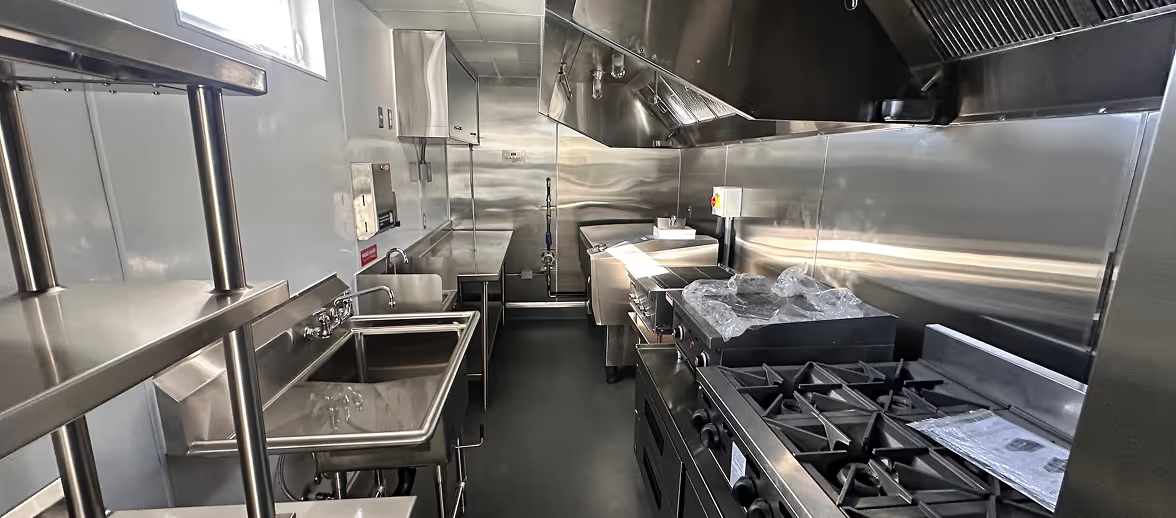
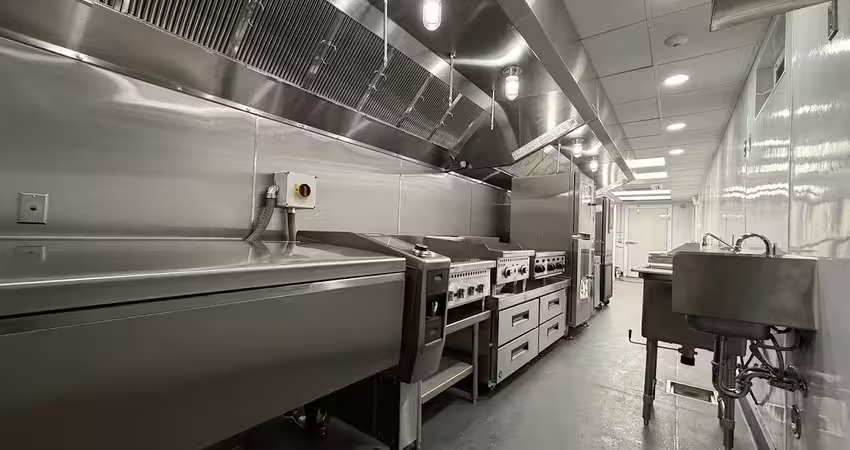
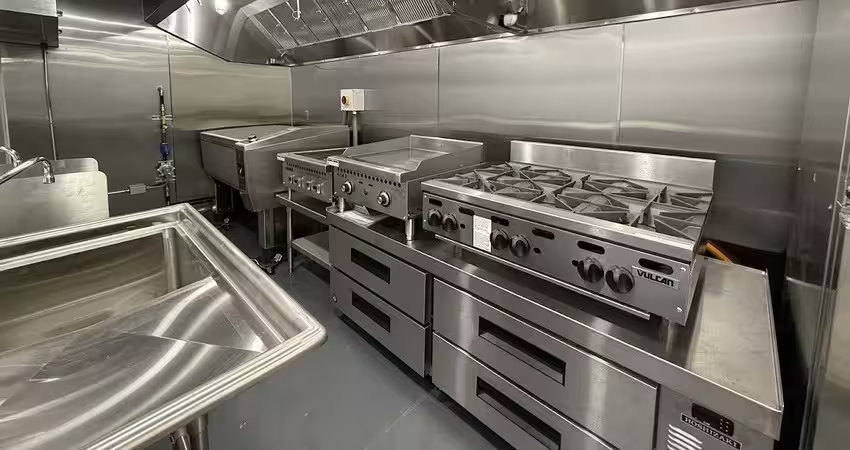
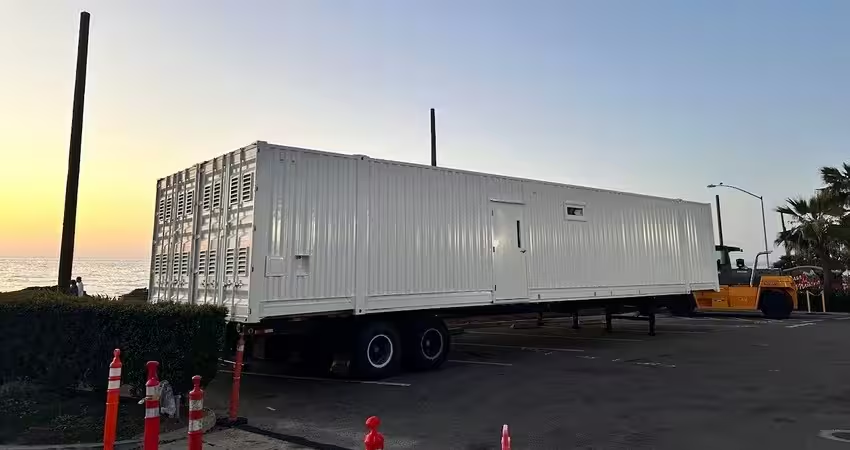
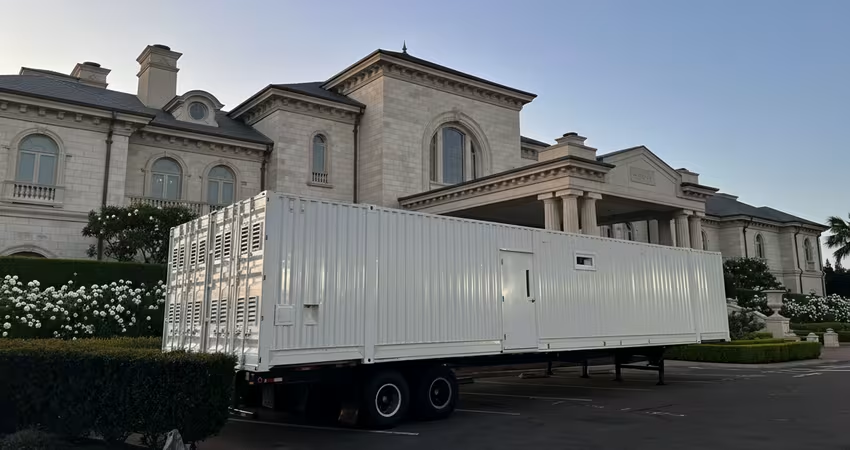
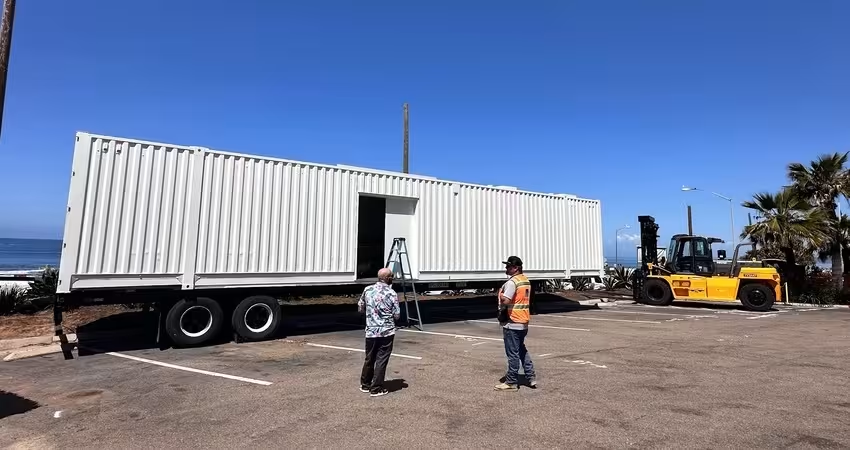
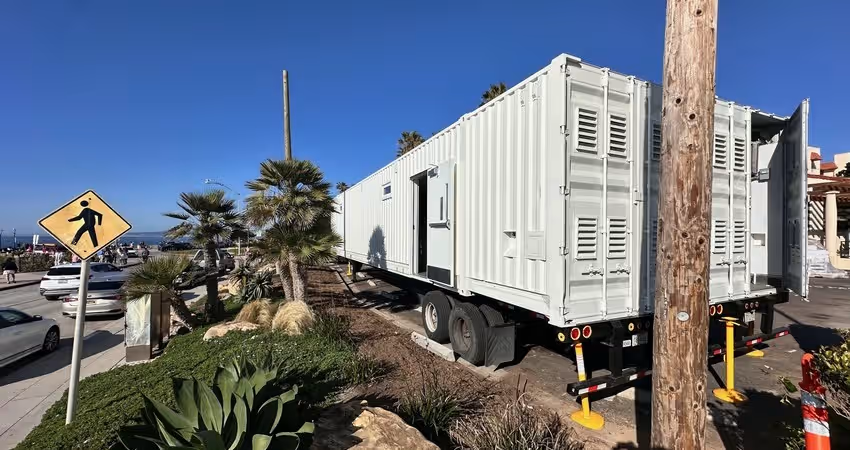
Mobile kitchen deployment provides the most comprehensive solution for maintaining food service during renovation. Professional units offer complete cooking, preparation, and warewashing capabilities that match permanent kitchen functionality.
Deployment timelines span 3-5 weeks from initial consultation to operational status. Site evaluation and needs assessment occur during week one. Unit configuration and utility coordination require weeks two through three. Delivery, positioning, and commissioning complete during weeks four and five.
Strategic integration with renovation schedules involves deploying mobile kitchens 1-2 weeks before permanent kitchen closure. This overlap period allows staff adaptation and workflow optimization without service interruption.
Tip: Mobile kitchen costs typically range $8,000-$45,000 monthly depending on size and configuration. Hotels calculate break-even at 2-3 weeks of maintained revenue versus rental expenses.
For hospitality operators focused on maintaining guest service during renovation, mobile kitchens provide seamless operational continuity that protects brand reputation and revenue streams. Understanding renovation budget planning helps operators evaluate mobile kitchen deployment as an investment in operational stability rather than an additional expense.
People Also Ask (FAQ)
How long does a typical commercial kitchen renovation take?
A comprehensive commercial kitchen renovation typically takes 12-20 weeks from start to finish, depending on the scope of work and facility size. Minor upgrades may complete in 8-10 weeks, while full gut renovations of large hotel or resort kitchens can extend to 24+ weeks. Planning your renovation timeline requires accounting for permit approvals, equipment lead times, and inspection schedules that often cause unexpected delays.
What are the main phases of a commercial kitchen renovation?
Commercial kitchen renovations follow five distinct phases: pre-construction planning and permits (2-4 weeks), demolition and structural work (2-3 weeks), utilities and infrastructure installation (3-4 weeks), equipment installation and testing (2-3 weeks), and final inspections and commissioning (1-2 weeks). Each phase must be completed sequentially, and delays in earlier phases compound throughout the project. Understanding required permits upfront prevents costly timeline extensions.
How can I keep my kitchen operational during renovation?
Most facilities maintain operations using temporary kitchen solutions during renovation, with mobile kitchen rentals being the most comprehensive option. Temporary kitchen solutions range from basic equipment setups in alternate spaces to fully equipped mobile units that match your permanent kitchen's capabilities. The key is securing your temporary solution 4-6 weeks before renovation begins to ensure seamless transition and staff training.
What permits are required for commercial kitchen renovation?
Commercial kitchen renovations typically require building permits, electrical permits, plumbing permits, mechanical/HVAC permits, and food service permits from local health departments. Fire department approvals are often needed for ventilation and suppression systems. Permit requirements vary by jurisdiction and can take 2-8 weeks to obtain, making early application critical to preventing project delays.
Conclusion
Successfully managing a commercial kitchen renovation timeline requires understanding the five critical phases, anticipating common delays, and maintaining realistic schedule expectations. Projects typically span 12-20 weeks with proper planning, though unknown conditions and permit processing can extend timelines significantly.
For operators who cannot afford service interruptions during renovation, deploying a fully equipped mobile kitchen solution maintains operational continuity and protects revenue streams throughout construction. Contact our renovation specialists to discuss your timeline requirements and temporary kitchen deployment options.

Testimonial

"What is standing out when you look at the mobile kitchen operation is the efficiency that we can really achieve because it's built for that."
Tell us about your kitchen needs and request a quote.
.png)
Turnkey mobile kitchen
Proudly made in-house in the USA
Commercial grade kitchen equipment
Code-compliant
Trusted by Industry Leaders