.gif)
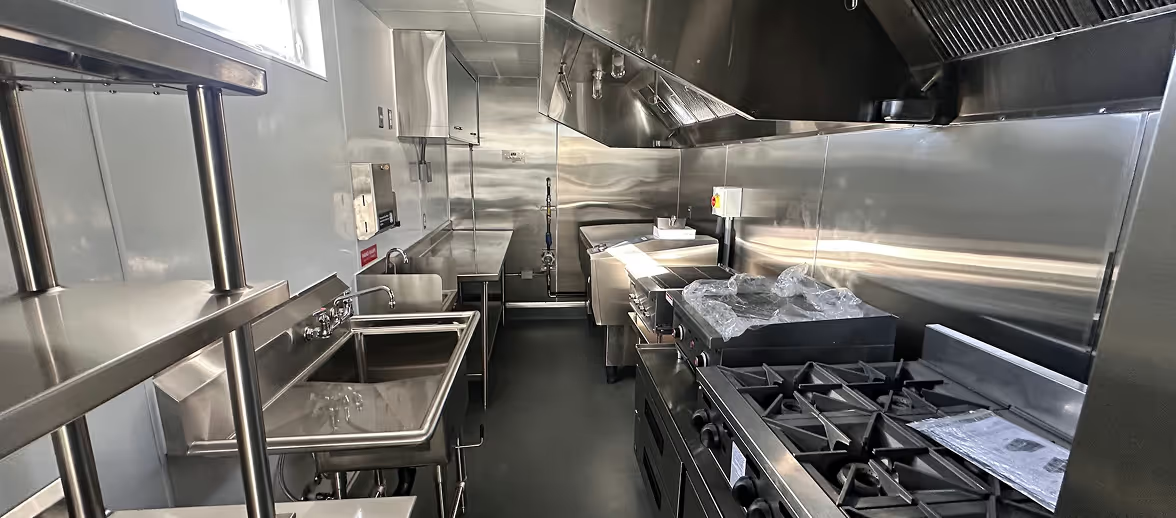
Hurricane disasters displace millions of Americans annually, creating immediate food security crises that can persist for weeks or months. While emergency shelters provide temporary housing, maintaining consistent, nutritious meal service for evacuees and relief workers presents a complex logistical challenge that overwhelms traditional food service infrastructure. Mobile kitchens hurricane disaster response operations have emerged as a critical solution, providing commercial-grade cooking capacity that can be rapidly deployed to affected areas. This article examines how purpose-built mobile kitchens support community recovery efforts, from immediate emergency feeding to long-term food service restoration for hotels, hospitals, and institutional facilities damaged by hurricanes.

The Critical Gap in Post-Hurricane Food Security
Hurricane-force winds and flooding create cascading failures across food service infrastructure. Commercial kitchens lose power, water treatment facilities go offline, and supply chains rupture simultaneously. According to CDC food safety during disasters guidelines, these disruptions transform basic meal access into a public health emergency within 72 hours.
Traditional emergency response relies on pre-packaged meals and bottled water distribution. These solutions cannot sustain communities through extended recovery periods. Evacuation shelters quickly overwhelm their limited food preparation capabilities, while hospitals and senior care facilities face critical challenges maintaining specialized dietary requirements for vulnerable populations.
Note: The FEMA disaster feeding guidelines emphasize that hot meal service restoration directly correlates with community resilience and recovery speed.
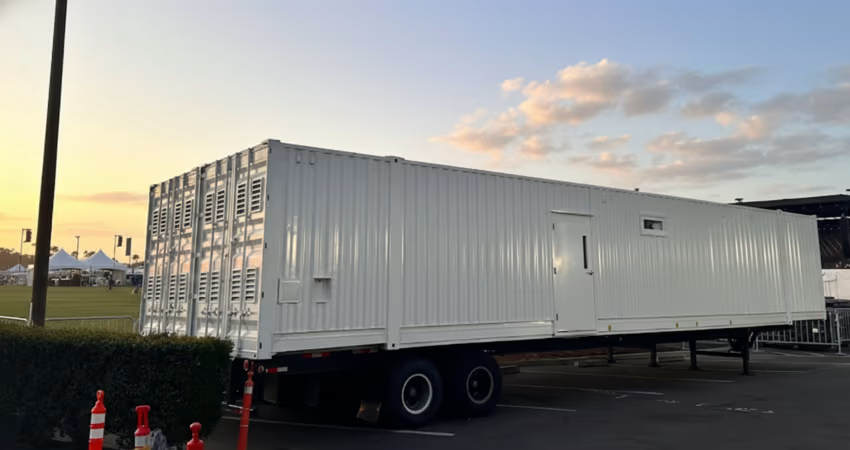
Professional commercial-grade mobile kitchens bridge this gap by delivering fully operational food service directly to affected areas. These purpose-built units operate independently of damaged infrastructure while maintaining health department compliance standards.
Mobile Kitchen Deployment Architecture
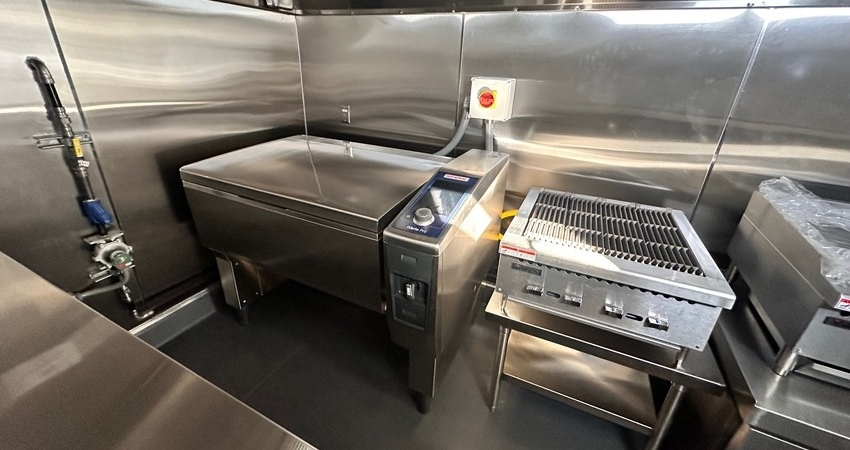
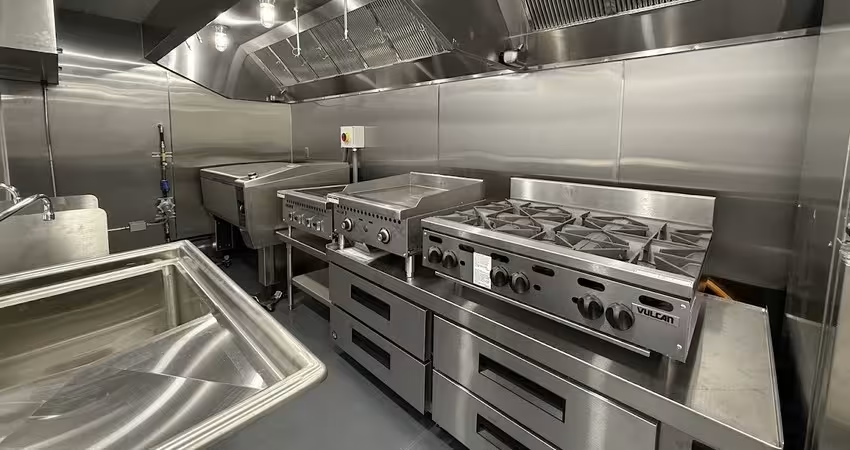
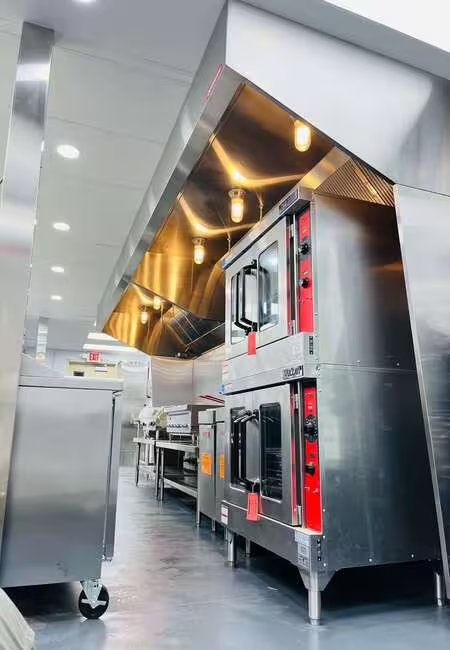
Purpose-built mobile kitchens feature comprehensive commercial equipment designed for high-volume meal production under emergency conditions. The mobile kitchen equipment and layout includes convection ovens, steam kettles, griddles, and refrigeration systems engineered to NFPA standards.
Essential components include:
- Commercial cooking equipment rated for continuous operation
- Three-compartment warewashing systems with hot water sanitization
- Walk-in refrigeration and freezer storage capacity
- Fire suppression systems compliant with NFPA fire safety codes for mobile units
- Generator connections for off-grid power capability
- Water storage tanks and waste water management systems
Tip: Professional units undergo pre-deployment health department inspections, eliminating regulatory delays during emergency activation.
Rapid Response Logistics
The rapid deployment procedures enable operational status within 24-48 hours after hurricane conditions subside. Professional deployment teams coordinate site preparation, utility connections, and health department approvals simultaneously rather than sequentially.
This streamlined approach contrasts sharply with permanent kitchen reconstruction, which requires months of permitting, construction, and equipment procurement. Emergency management agencies increasingly recognize mobile kitchens as force multipliers that restore community feeding capacity while long-term rebuilding occurs.
Organizational Applications During Hurricane Recovery
Emergency Management Operations
Municipal emergency management agencies utilize mobile kitchens to establish centralized emergency feeding operations that serve multiple shelter locations. This hub-and-spoke distribution model maximizes efficiency while maintaining food safety protocols across dispersed evacuation sites.
American Red Cross disaster feeding programs coordinate with local agencies to position mobile kitchens strategically throughout affected regions. Single units can produce thousands of meals daily, supporting both evacuees and emergency response personnel.
Healthcare Facility Continuity
Hospitals and senior living facility food service continuity requirements cannot be interrupted during hurricane recovery. These facilities serve medically vulnerable populations requiring specialized diets, therapeutic nutrition, and consistent meal schedules.
Mobile kitchens enable healthcare facilities to maintain dietary services while permanent kitchens undergo flood remediation, equipment replacement, and structural repairs. This continuity proves essential for patient care quality and regulatory compliance.
Hospitality Industry Recovery
Hurricane damage to hotel and resort properties creates unique challenges for maintaining hotel food service during reconstruction periods. Guest satisfaction and revenue preservation depend on consistent dining experiences, even with compromised permanent facilities.
The National Restaurant Association disaster preparedness research indicates that mobile kitchen solutions enable hospitality businesses to resume operations weeks or months before permanent kitchen restoration completion. This represents a cost-effective disaster recovery solution compared to extended closure periods.

Strategic Integration with Emergency Planning
Forward-thinking municipalities incorporate mobile kitchen capabilities into comprehensive emergency operations plans before hurricane season begins. Pre-positioned rental agreements with qualified providers eliminate deployment delays and guarantee unit availability during peak demand periods.
Example: Coastal communities establish staging areas with utility connections, enabling mobile kitchen activation within hours rather than days after storm passage.
Emergency management coordinators identify organizations that rely on mobile kitchens during recovery planning exercises. These stakeholder mappings ensure resource allocation aligns with actual community needs during crisis response.
Pre-event coordination with health departments, fire marshals, and utility providers streamlines regulatory approvals and site preparations. This proactive approach transforms mobile kitchens from emergency assets into integrated community resilience infrastructure.
People Also Ask (FAQ)
How quickly can mobile kitchens be deployed after a hurricane?
Purpose-built mobile kitchens can typically be deployed within 24-48 hours after hurricane conditions subside and roads become accessible. Unlike retrofitted trailers, these units are designed for rapid setup with self-contained utilities and minimal site preparation requirements. Professional deployment teams can have mobile kitchen trailers operational within hours of arrival, providing immediate commercial-grade cooking capacity for emergency feeding operations.
What capacity do mobile kitchens have for disaster feeding operations?
Commercial-grade mobile kitchens can serve hundreds to thousands of meals per day, depending on configuration and staffing. These units feature full commercial equipment including convection ovens, griddles, fryers, and large-capacity preparation areas. Mobile kitchen trailer interiors are engineered to match the efficiency of permanent commercial kitchens, enabling high-volume meal production for extended relief operations.
Who typically uses mobile kitchens during hurricane recovery?
Emergency management agencies, relief organizations, healthcare facilities, and hospitality businesses utilize mobile kitchens during hurricane recovery. Hotels and resorts use them to maintain guest services while permanent kitchens undergo repairs, while hospitals and senior living facilities ensure continuity of dietary services. Common mobile kitchen users span from government agencies coordinating mass feeding to private businesses maintaining operations during facility restoration.
How do mobile kitchens maintain food safety during disaster response?
Professional mobile kitchens maintain food safety through built-in refrigeration systems, proper ventilation, hand-washing stations, and temperature monitoring equipment that meets commercial health codes. These purpose-built units include backup power systems and water storage to ensure continuous safe operation even when local utilities are compromised. Professional deployment processes include health department coordination and compliance verification before operations begin.
Conclusion
Mobile kitchens represent a proven solution for maintaining community food security during extended hurricane recovery periods. These purpose-built units deliver commercial-grade cooking capacity where traditional infrastructure fails, supporting everything from emergency shelters to healthcare facilities and hospitality operations.
Communities seeking reliable disaster response capabilities should explore professional mobile kitchen solutions or discuss emergency preparedness planning with qualified providers before the next hurricane season begins.


Testimonial

"What is standing out when you look at the mobile kitchen operation is the efficiency that we can really achieve because it's built for that."
Tell us about your kitchen needs and request a quote.
.png)
Turnkey mobile kitchen
Proudly made in-house in the USA
Commercial grade kitchen equipment
Code-compliant
Trusted by Industry Leaders